
How to Display LEGO Sets: 20+ LEGO Display Ideas for Collectors| Mark's Magic
How to Display LEGO Sets: The Complete Collector’s Guide

Displaying LEGO sets isn’t just about storage — it’s about presentation, storytelling, and letting your build be seen. Many collectors reach a point where finishing a build raises a new question: where should this actually go — desk, shelf, or wall? Whether you collect a single flagship set or an entire themed lineup, the right display approach can completely change how your LEGO looks and feels in a space.
This guide is designed as a central reference for LEGO collectors. It covers the most important display options, common questions, and decision points — with links to deeper guides for each scenario.
Why LEGO Display Matters More Than You Think
Once a LEGO set is finished, its role changes:
-
From building experience → to visual centerpiece
-
From play object → to long‑term display piece
Good display does three things:
-
Enhances the design details you worked to build
-
Protects the structure from accidental damage
-
Integrates LEGO naturally into your living space
Collectors often find that the right display makes even familiar sets feel new again. Many remember the moment a finished build stopped feeling like a toy — and started feeling like something worth showing.
Desk Display vs Wall Display: Which Is Right for You?
One of the first decisions every collector faces is where to display LEGO. This choice usually comes down to how permanent you want the display to be, and how much visual impact you’re aiming for.
Desk & Shelf Displays

Best for:
-
Small to medium‑sized sets
-
Builds you enjoy viewing up close
-
Flexible layouts that change often
Pros:
-
Easy access
-
No installation
-
Ideal for offices and shelves
Limitations:
-
Uses surface space
-
Can look cluttered with multiple sets
If shelving is your preferred route, our LEGO Display Shelves guide explains how to compare shelf depth, load capacity, spacing, and room for a growing collection.
Wall Displays

Best for:
-
Statement builds
-
Long‑term collectors
-
Limited desk or shelf space
Pros:
-
Strong visual impact
-
Keeps builds safe and elevated
-
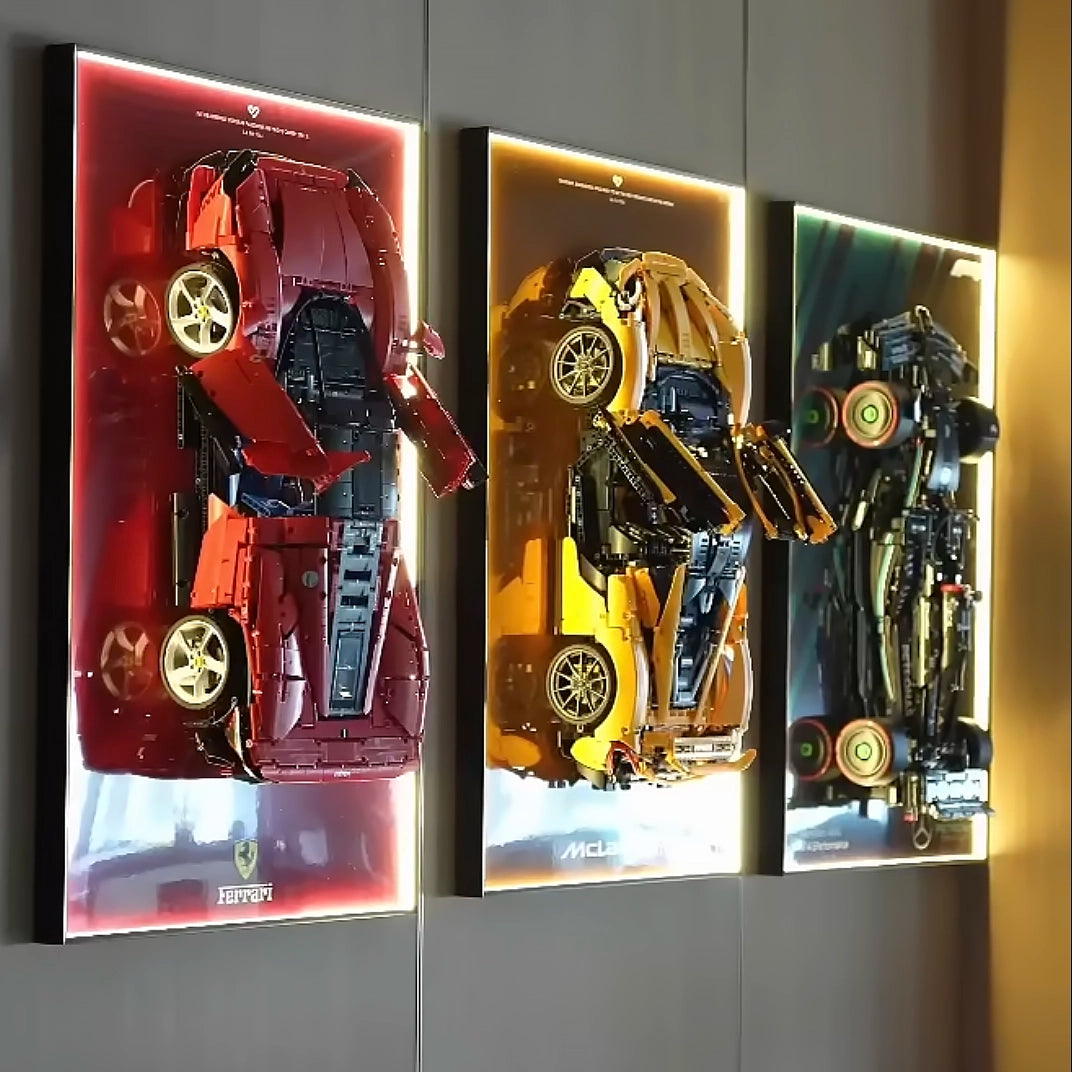
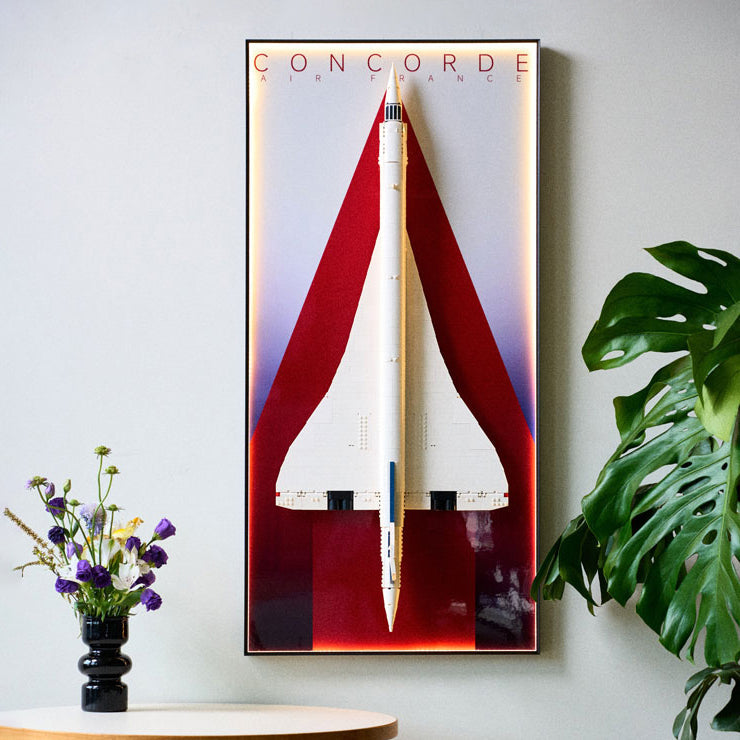
Turns LEGO into wall art

Limitations:
-
Requires planning
-
Less frequent rearranging
👉 Many collectors eventually use both, depending on the set.

Displaying LEGO by Theme
Different LEGO themes are designed with different proportions, silhouettes, and viewing angles — which affects how they should be displayed.
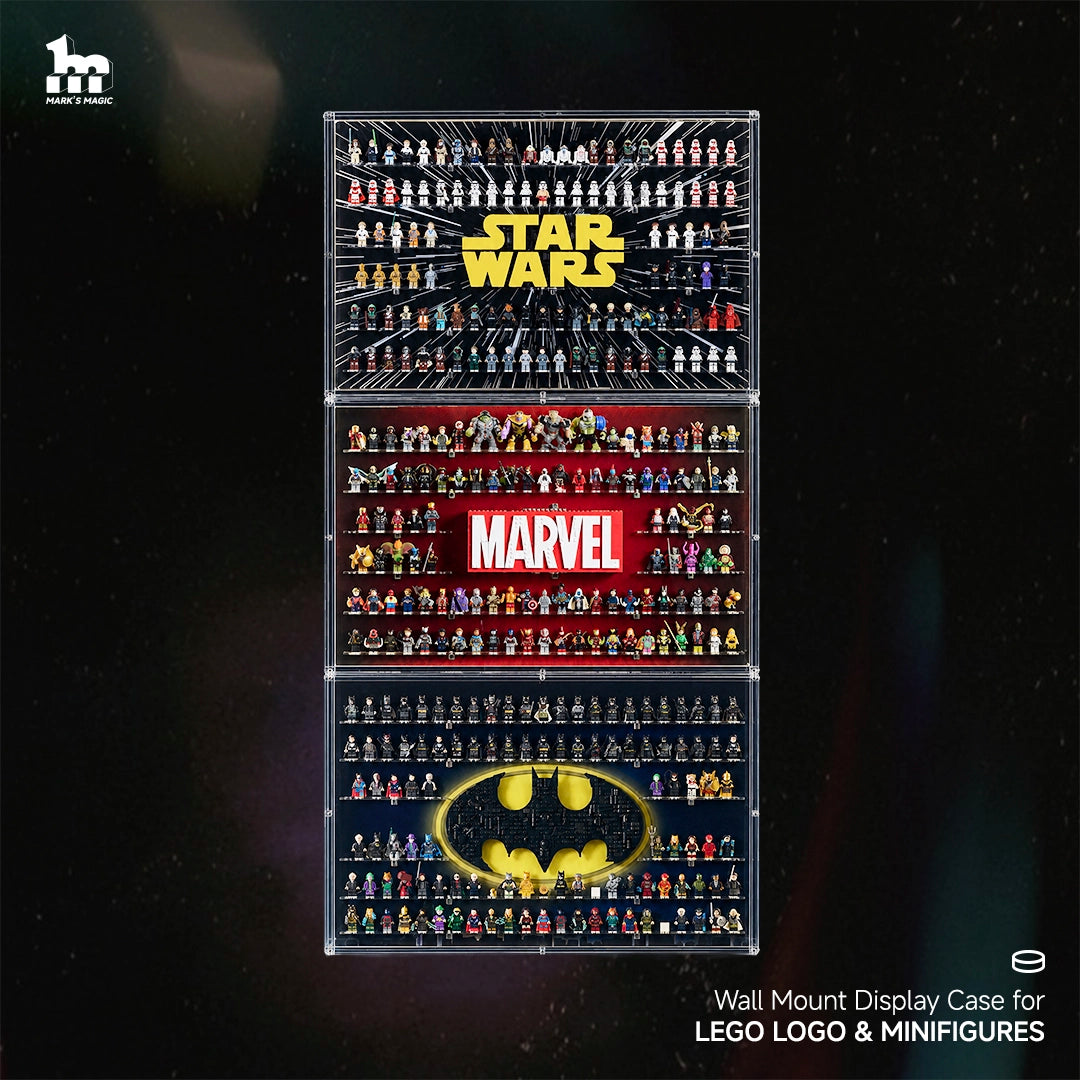
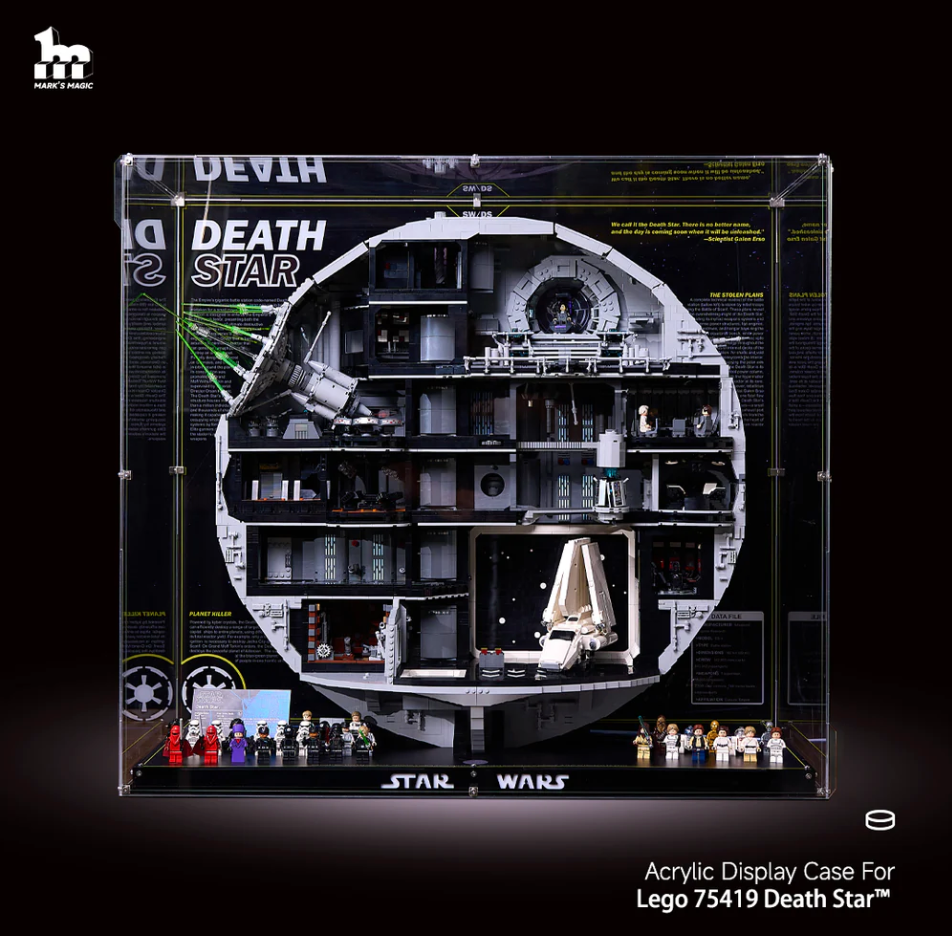
Star Wars & Sci‑Fi Sets

-
Often benefit from angled or elevated display
-
Look best when viewed slightly from below
-
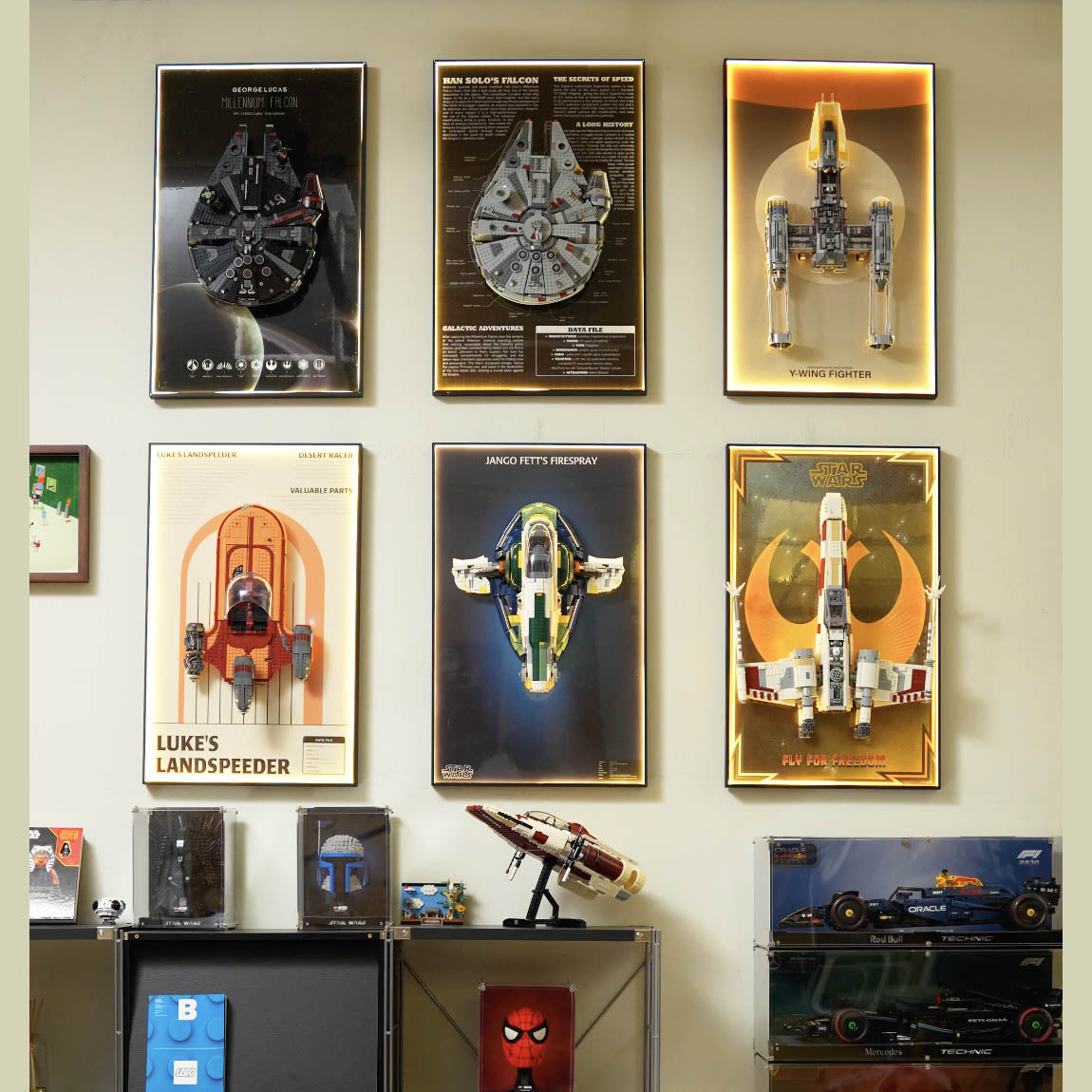
Wall display works especially well for ships
For more specific inspiration on showing off Star Wars creations on your walls, check out our guide on epic wall display ideas for LEGO Star Wars sets.
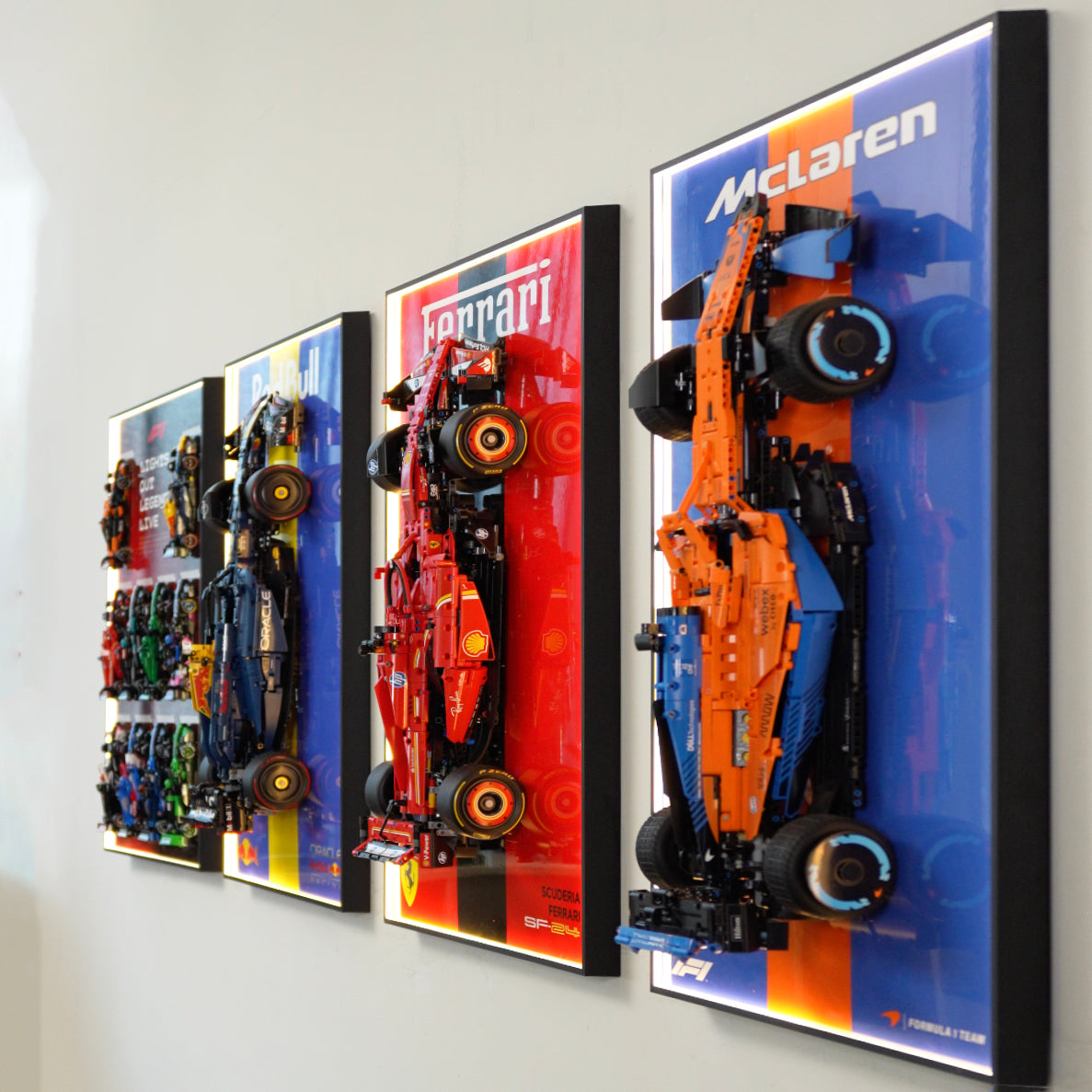
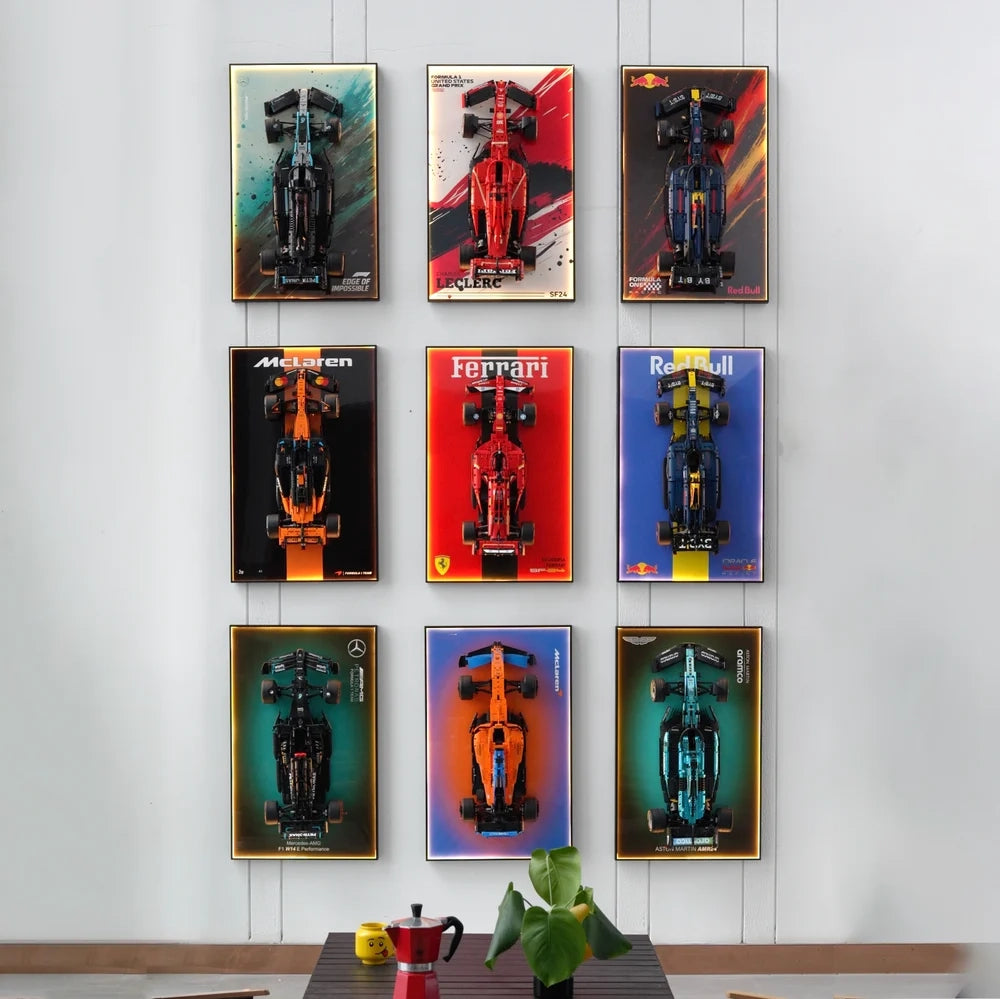
F1 & Vehicle Builds

-
Side profiles matter
-
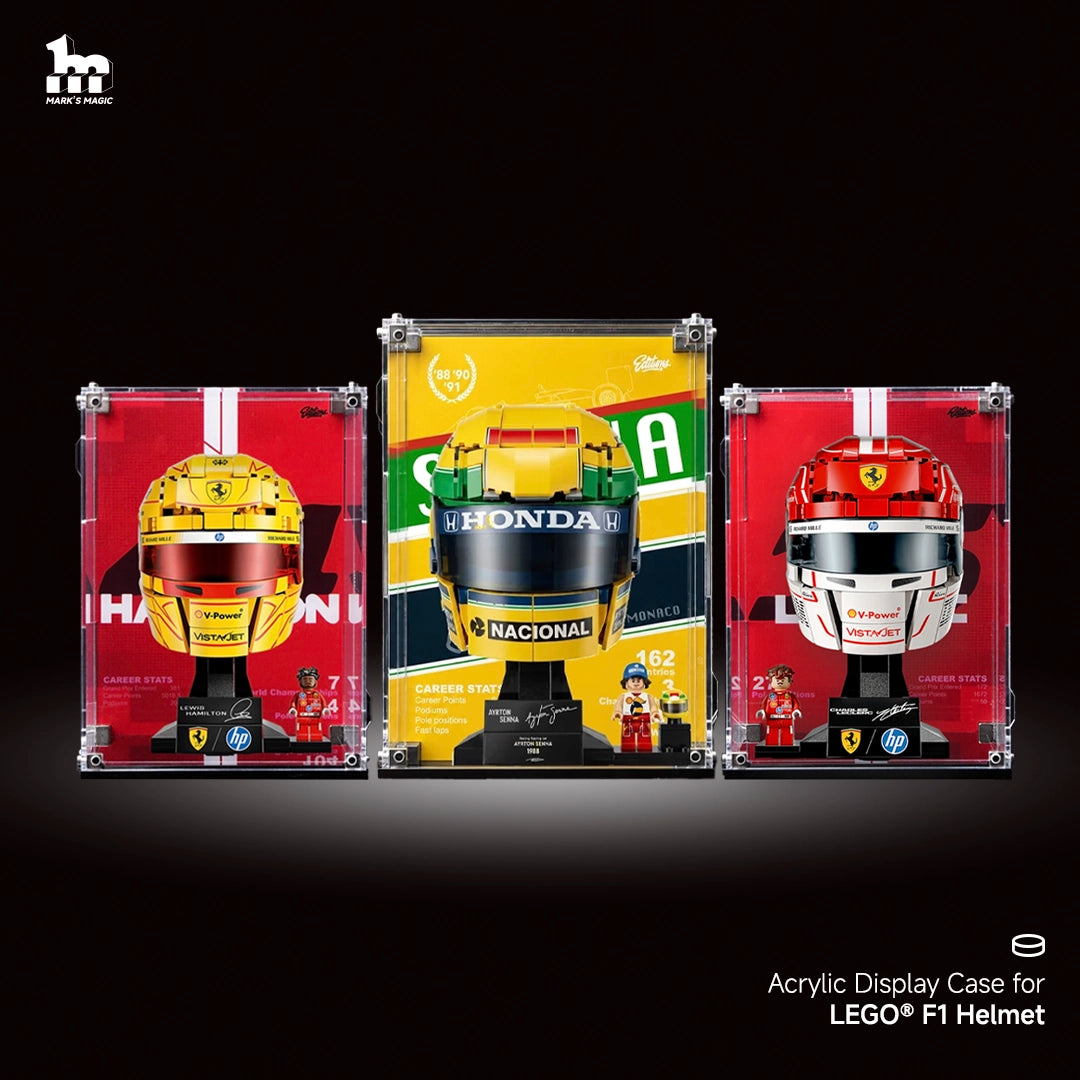
Consistent height and spacing create a gallery feel

-
Wall or long horizontal shelf displays work well
Technic & Engineering Sets

-
Structural detail is part of the appeal
-
Open displays with lighting enhance depth
Technic vehicles often need a different display approach to highlight their proportions, engineering details, and side profiles. See our complete guide to displaying LEGO Technic cars for more ideas.
ICONS & Adult‑Focused Sets

-
Designed as décor
-
Neutral backgrounds and frames work best
If your collection focuses on display-first models, explore our guide to collecting and displaying LEGO Icons at home, including wall, shelf, and acrylic case ideas.
Single Set vs Collection Display
Displaying One Statement Set

Experienced collectors often treat a single standout build as a focal point rather than just another model. Focus on:
-
Clean background
-
Breathing space around the model
-
Lighting that highlights key details

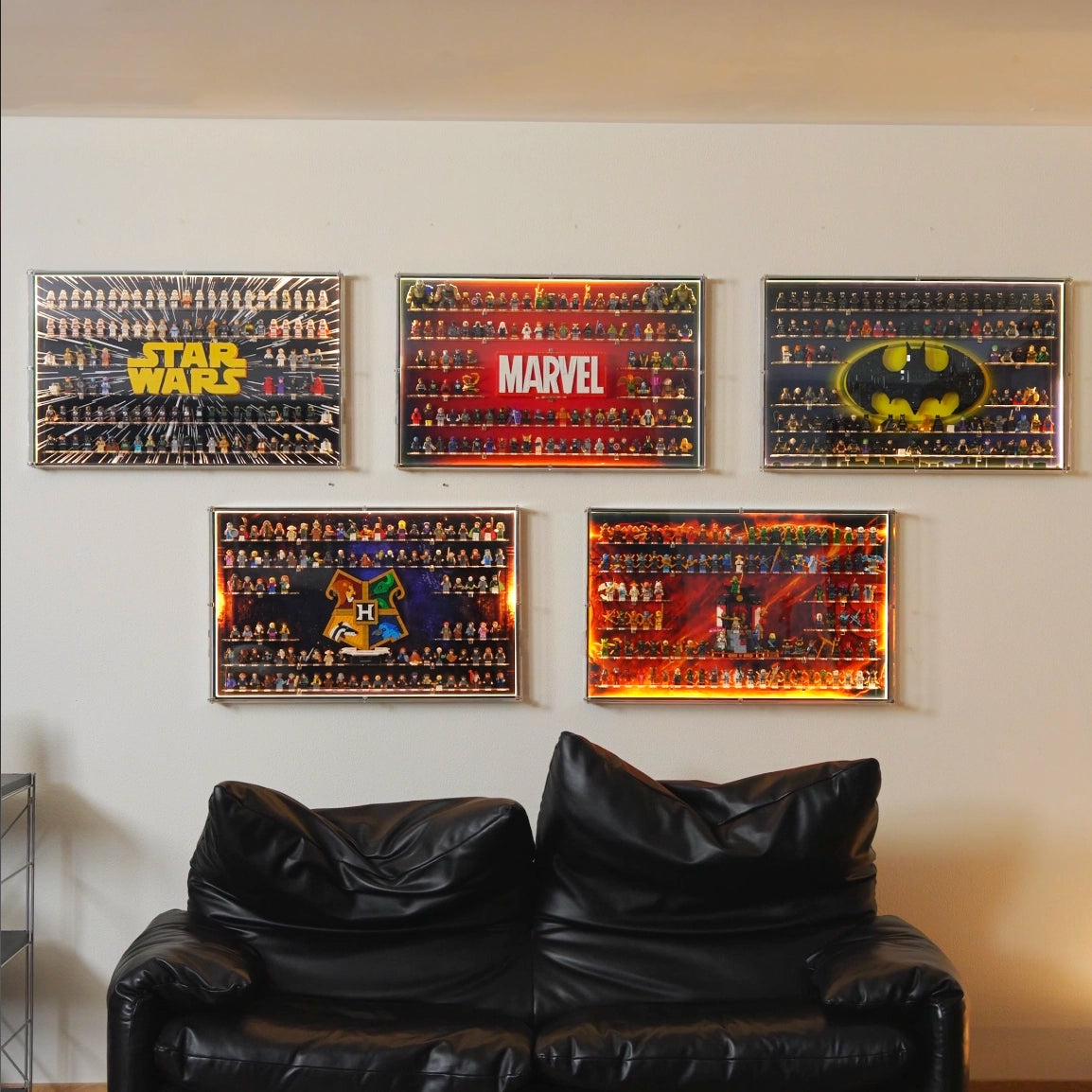
Displaying Multiple Sets Together
A common mistake collectors make is trying to show everything at once, instead of designing the display as a cohesive scene. Focus on:

-
Consistent spacing
-
Alignment and symmetry
-
Visual hierarchy (one hero set, others supporting)
Well‑planned collection displays tell a story instead of feeling crowded.
As your collection grows, spacing, scale, color, and visual hierarchy become increasingly important. Our guide to displaying multiple LEGO sets without clutter covers practical ways to organize a larger collection.
Should You Use Lighting for LEGO Displays?

Lighting is optional — but powerful. When used thoughtfully, it’s one of the easiest ways to shift a display from casual to gallery‑like.
Lighting works best when:
-
The set has strong texture or mechanical detail

-
The display is better viewed at night
-
You want museum‑style presentation

Good LEGO lighting should:
-
Be subtle, not harsh
-
Enhance shape, not overpower color
-
Feel integrated with the display
Displaying LEGO in Small Spaces
Limited space doesn’t mean limited display potential. In fact, space constraints often lead to the most intentional and visually striking LEGO displays — especially in compact hobby rooms, home offices, or even small man caves where every display choice needs to work harder.
For a broader look at planning shelves, walls, lighting, and collector zones in one space, see our LEGO Room Ideas for Adults

Smart strategies include:
-
Vertical wall displays
-
Rotating seasonal displays
-
Prioritizing depth over width
Small, focused displays often feel more intentional than crowded large ones, which is why LEGO can work surprisingly well as part of thoughtful small man cave ideas when space is limited but personality matters.
How to Choose the Right LEGO Display Solution
Before choosing any display method, it helps to step back and think like a collector making a long‑term decision:
-
Is this a long‑term or temporary display?
-
Is the set meant to be a focal point or part of a collection?
-
How much space do I realistically have?
The best LEGO display solution is the one that fits your space, your collection, and how you enjoy your builds.
If you’re looking for creative inspiration, we’ve also shared several fun LEGO display ideas used by collectors at home.
If enclosed protection is a priority, our Ultimate LEGO Display Case Guide takes a deeper look at acrylic quality, clearance, dust and UV protection, lighting, and wall-mounted options
Final Thoughts: LEGO as Display, Not Just Storage
Great LEGO displays don’t shout — they invite people to look closer.
When done right, LEGO becomes:
-
Part of your interior design
-
A reflection of your interests
-
A long‑term collectible worth showcasing
This guide is the foundation. Each section can be explored further depending on your collection, theme, and space.

Written by Zhiyuan Ma











Leave a comment
This site is protected by hCaptcha and the hCaptcha Privacy Policy and Terms of Service apply.