

Comment exposer la LEGO 11381 Jaguar E-Type : laissez sa silhouette emblématique prendre toute la place | La magie de Mark
La LEGO Icons 11381 Jaguar Type E n’est pas un modèle qui est automatiquement mis en valeur, quel que soit l’endroit où vous le placez.
Son attrait réside dans la relation entre le long capot, l’habitacle bas, la carrosserie arrière arrondie et la finition vert profond. Ensemble, ces détails créent la silhouette inimitable de l’original Jaguar E-Type. Pourtant, cette silhouette n’est pas visible de la même manière sous tous les angles.
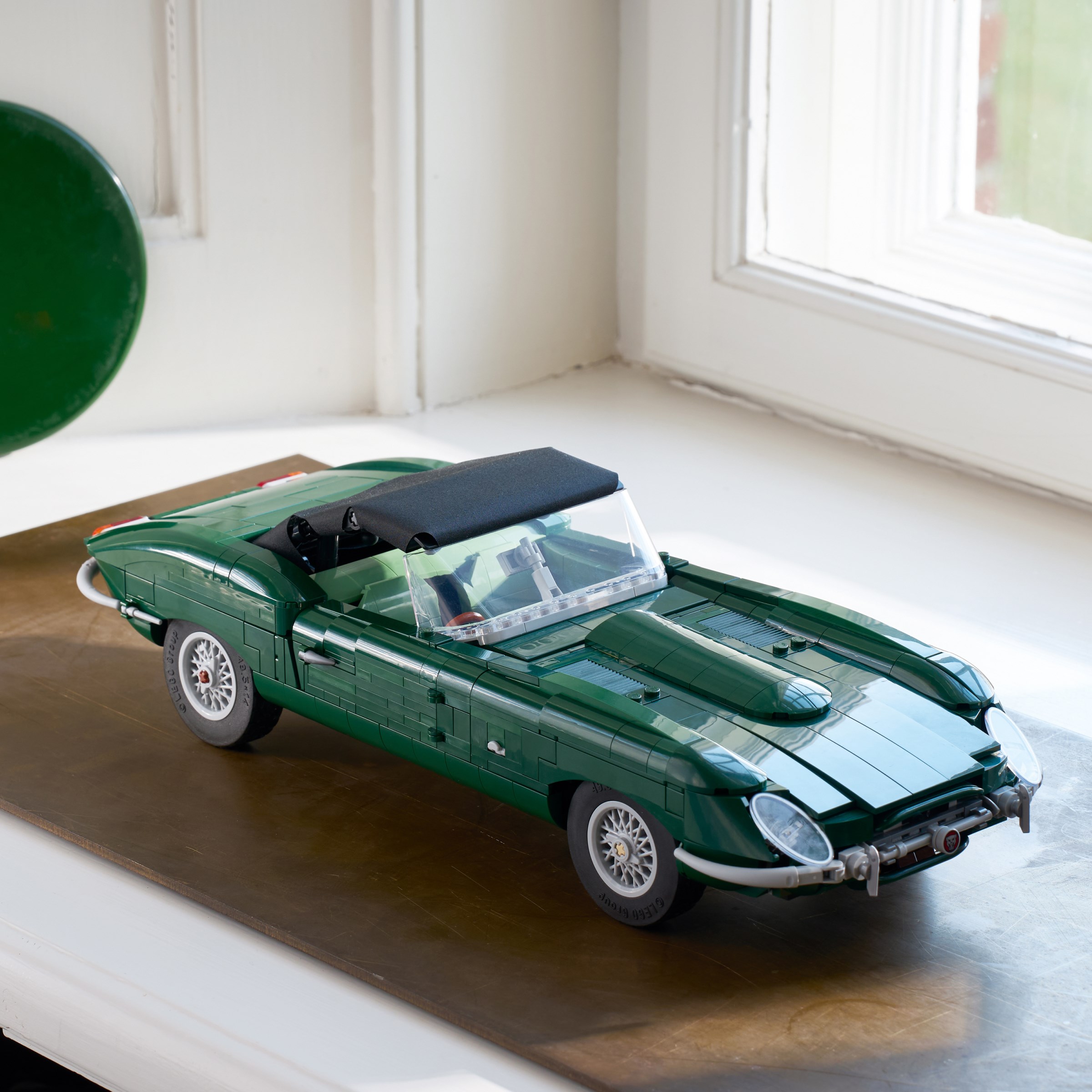
Vue directement de l’avant, l’attention peut se porter sur les phares, le pare-chocs et les différentes techniques de construction. Tournez légèrement le modèle, et le design devient plus convaincant. Le capot paraît plus long, l’habitacle est plus bas et la courbe arrière complète le profil.
C’est la clé pour comprendre comment exposer cette voiture Jaguar LEGO : ne commencez pas par chercher une étagère vide. Commencez par décider quelle partie de la voiture mérite d’être vue en premier.
Commencez par la silhouette de la Jaguar Type E
La Jaguar Type E ne s’appuie ni sur un grand aileron arrière, ni sur des graphismes spectaculaires, ni sur une silhouette agressive pour attirer l’attention. Son caractère vient de ses proportions.
Pour cette raison, une vue de côté ou un angle de trois quarts fonctionne généralement mieux qu’une présentation de face.
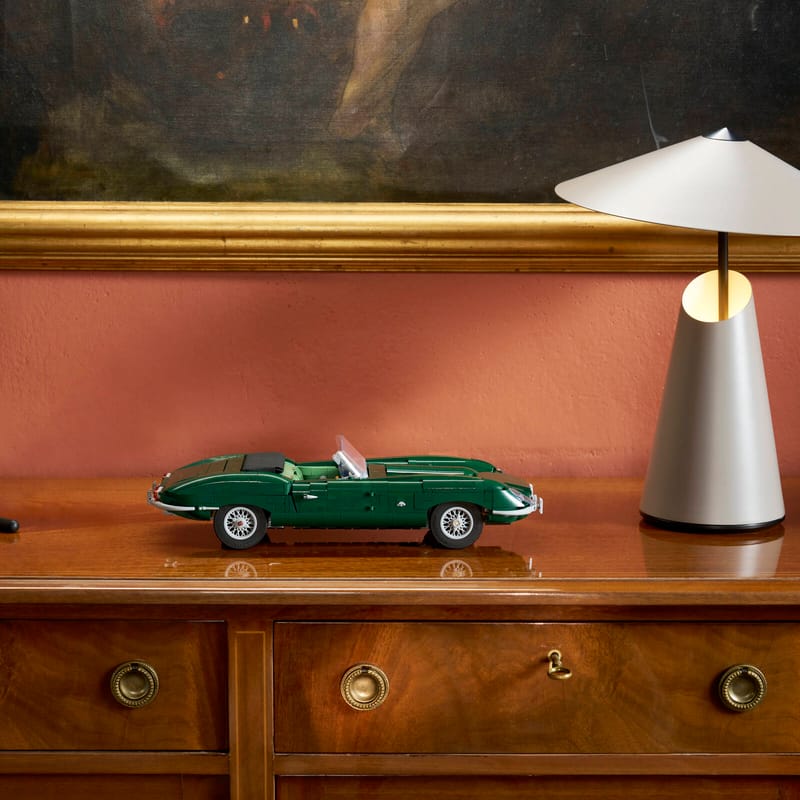
De profil, la relation entre la roue avant, la portière, l’arche arrière et l’habitacle devient beaucoup plus claire. Orienter légèrement le nez vers le spectateur ajoute de la profondeur tout en laissant visible la longueur de la voiture.
Une étagère encombrée peut facilement atténuer cet effet. Les livres, les sets aux couleurs vives et les décorations voisines rivalisent avec la carrosserie vert foncé et donnent au modèle une impression de lourdeur qu’il n’a pas réellement.
La Jaguar n’a pas besoin de davantage d’objets autour d’elle. Elle a besoin de suffisamment d’espace pour que sa silhouette reste clairement visible.
Ce que les réseaux sociaux réussissent avec la LEGO Jaguar
Les photos et les courtes vidéos LEGO les plus réussies ne montrent presque jamais tout en même temps.
Au lieu de cela, la caméra commence souvent près d’une roue, de l’aile avant ou d’une partie de la carrosserie, avant de longer le côté de la voiture. L’habitacle, le moteur et les détails plus fins apparaissent ensuite.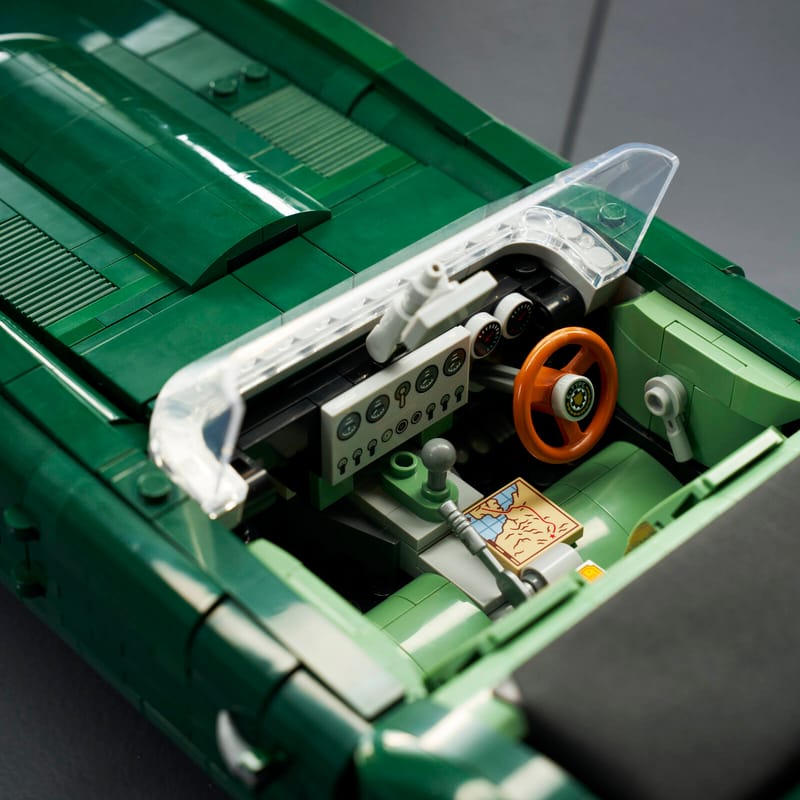
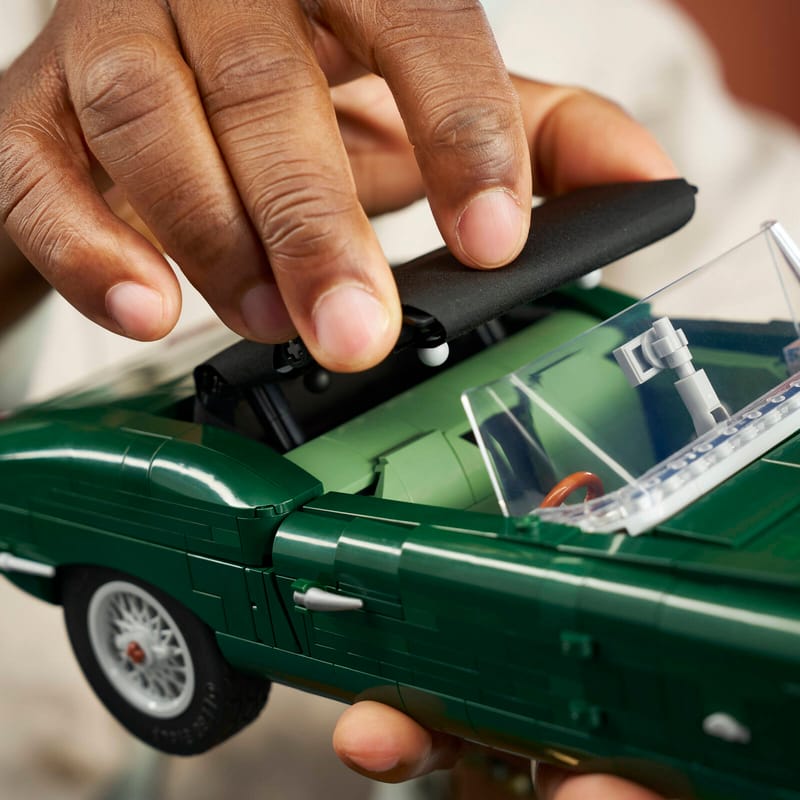
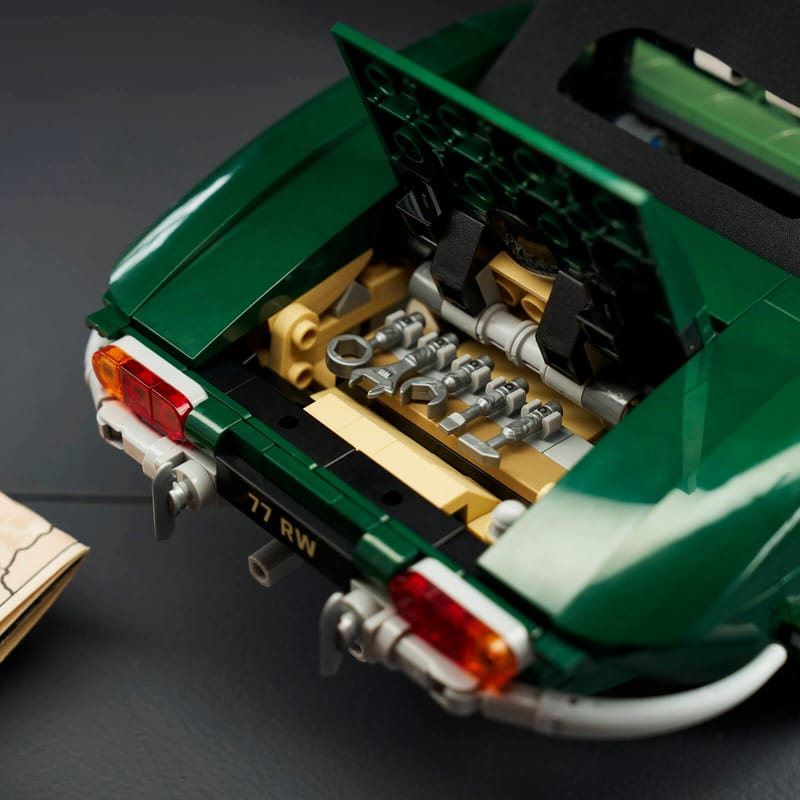
Cela crée un ordre de découverte simple :
Commencez par reconnaître la Jaguar Type E. Puis découvrez les détails LEGO.
Une présentation physique devrait suivre le même principe. Il n’est pas nécessaire de mettre simultanément l’accent sur le capot, les portières, l’intérieur, les roues et le coffre. Un point focal clair produira généralement un résultat plus percutant.
L’arrière-plan joue ici un rôle important. Un modèle vert foncé peut perdre en définition devant un mur sombre ou une bibliothèque encombrée. Une présentation plus réfléchie détache la carrosserie de son environnement et guide clairement le regard le long de la voiture.
C’est particulièrement important pour les collectionneurs qui comparent différents Ensembles LEGO Jaguar ou à disposer le modèle à côté d’autres véhicules classiques. Une présentation claire permet de conserver visibles les proportions caractéristiques de chaque voiture.
Est-ce un modèle réduit de voiture ou une œuvre d’art automobile ?
Il existe deux façons naturelles de présenter la LEGO 11381.
La première consiste à la conserver comme un modèle en trois dimensions. Vous pouvez l’observer sous plusieurs angles, examiner l’intérieur, ouvrir le capot et modifier occasionnellement sa position.
La seconde consiste à la considérer comme une œuvre d’art automobile murale. Dans ce contexte, la silhouette, l’identité de la marque et la composition générale deviennent plus importantes que l’accès à chaque élément mobile.
Aucune approche n’est meilleure dans toutes les situations. Le bon choix dépend de ce que vous souhaitez communiquer avec votre présentation.
Pour les collectionneurs à la recherche d’une Voiture Jaguar E-Type une présence décorative plus marquée, une présentation murale peut être la meilleure solution. Ceux qui préfèrent étudier la construction et les détails mécaniques trouveront peut-être une vitrine en acrylique plus intéressante.
Un cadre mural d’exposition renforce l’identité de la Jaguar
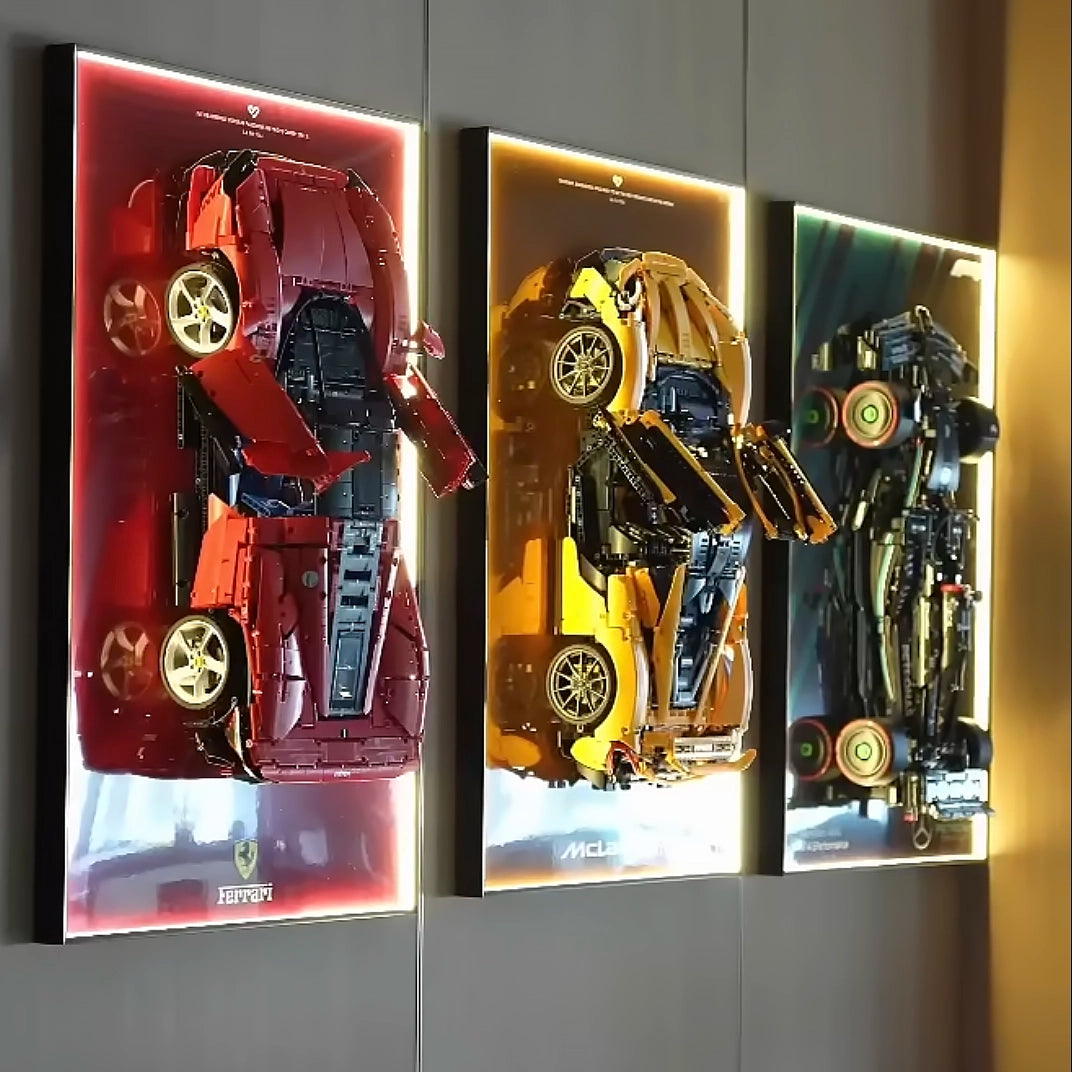
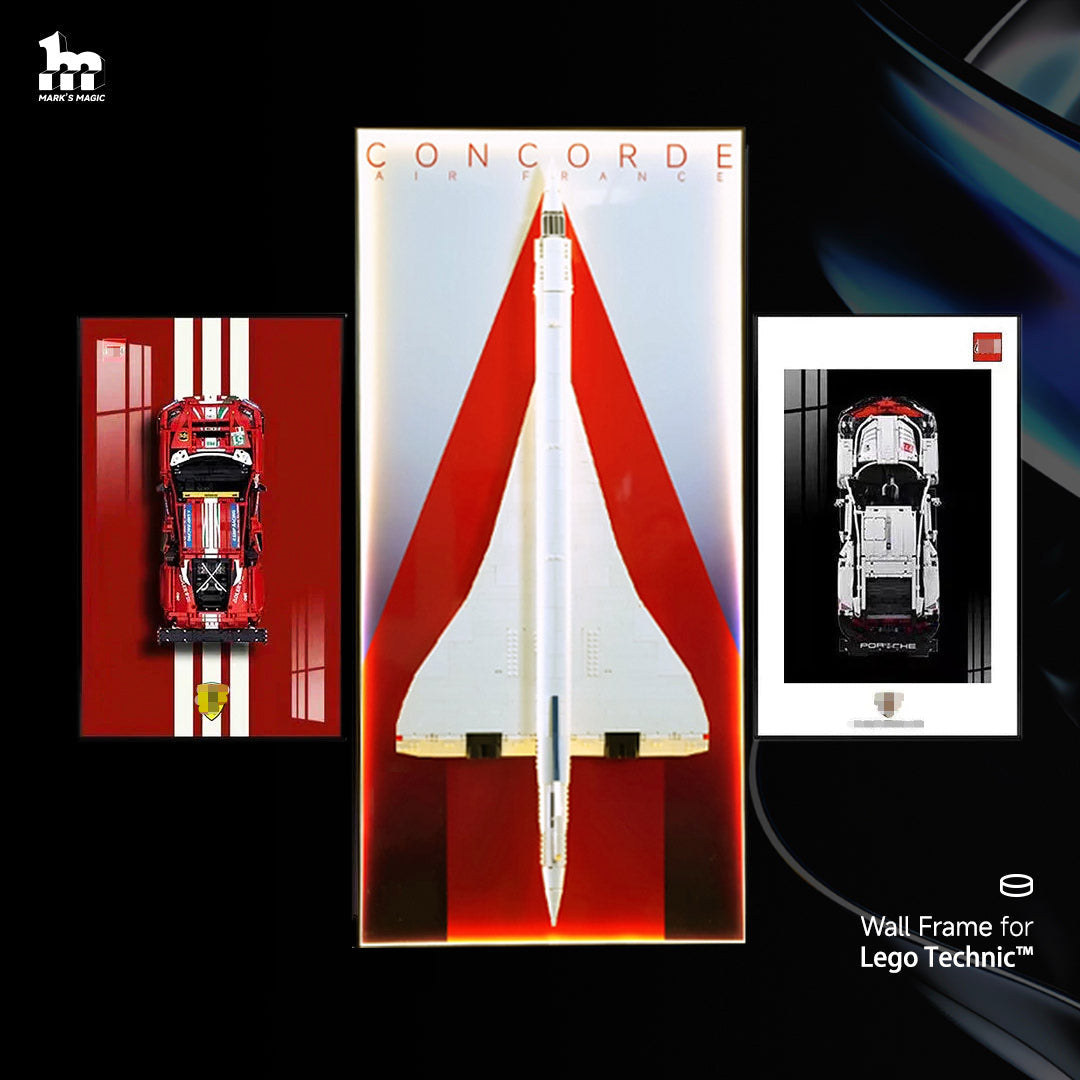
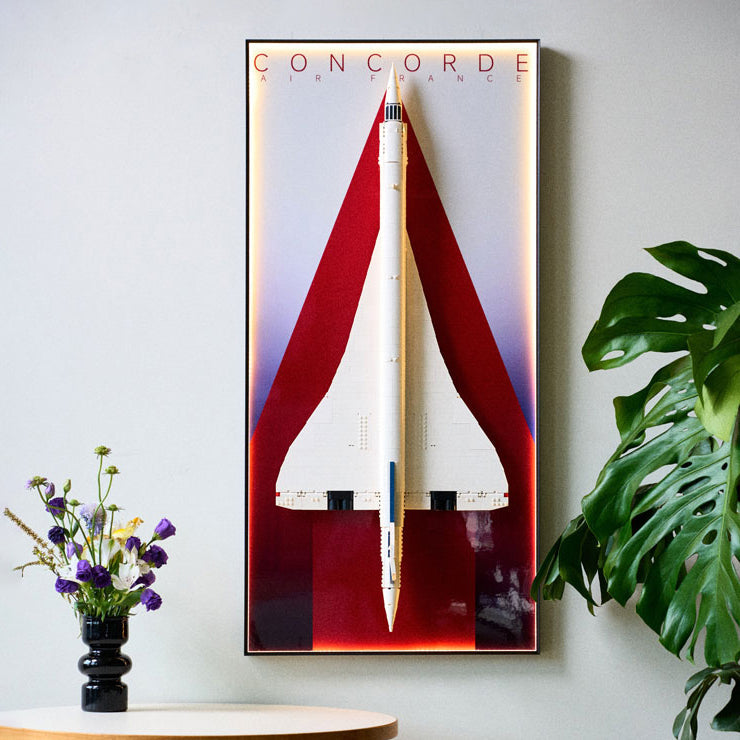
Une présentation murale fonctionne particulièrement bien pour une voiture définie par son profil latéral. Elle fixe le modèle selon un angle de vue choisi et élimine les distractions visuelles d’une étagère encombrée.


La Cadre mural d’exposition pour LEGO 11381 Icons Jaguar E-Type est conçu pour donner au modèle l’impression de faire partie d’une composition automobile complète plutôt que d’être simplement un set LEGO fixé au mur.
Son logo Jaguar donne immédiatement à l’exposition une identité propre. L’emblème relie le modèle vert foncé à l’héritage de la voiture réelle et aide les visiteurs à comprendre le sujet avant qu’ils ne commencent à examiner les détails construits en briques.
Cela compte lorsque plusieurs voitures LEGO Icons sont exposées ensemble. Sans cadre visuel distinctif, la Jaguar peut devenir un véhicule parmi tant d’autres dans la collection. Le logo lui confère une présence plus affirmée et renforce son caractère britannique classique.
Un arrière-plan texturé en dégradé apporte de la profondeur
L’arrière-plan texturé en dégradé est tout aussi important.
Un arrière-plan noir uni peut absorber certaines parties de la carrosserie vert foncé, tandis qu’une surface blanche et sobre peut donner à l’ensemble une impression d’inachevé. Un dégradé crée une séparation sans éclipser le modèle.
Le changement de tonalité aide à définir le capot, la ligne de toit, les roues et la partie arrière de la carrosserie. Il ajoute également de la profondeur au cadre, donnant l’impression que la voiture se trouve dans un espace conçu à cet effet plutôt que devant un panneau vierge.
Associé au logo Jaguar, l’arrière-plan crée un effet plus proche d’une affiche automobile en relief. Le modèle reste au centre de l’attention, mais le traitement graphique qui l’entoure lui donne du contexte.
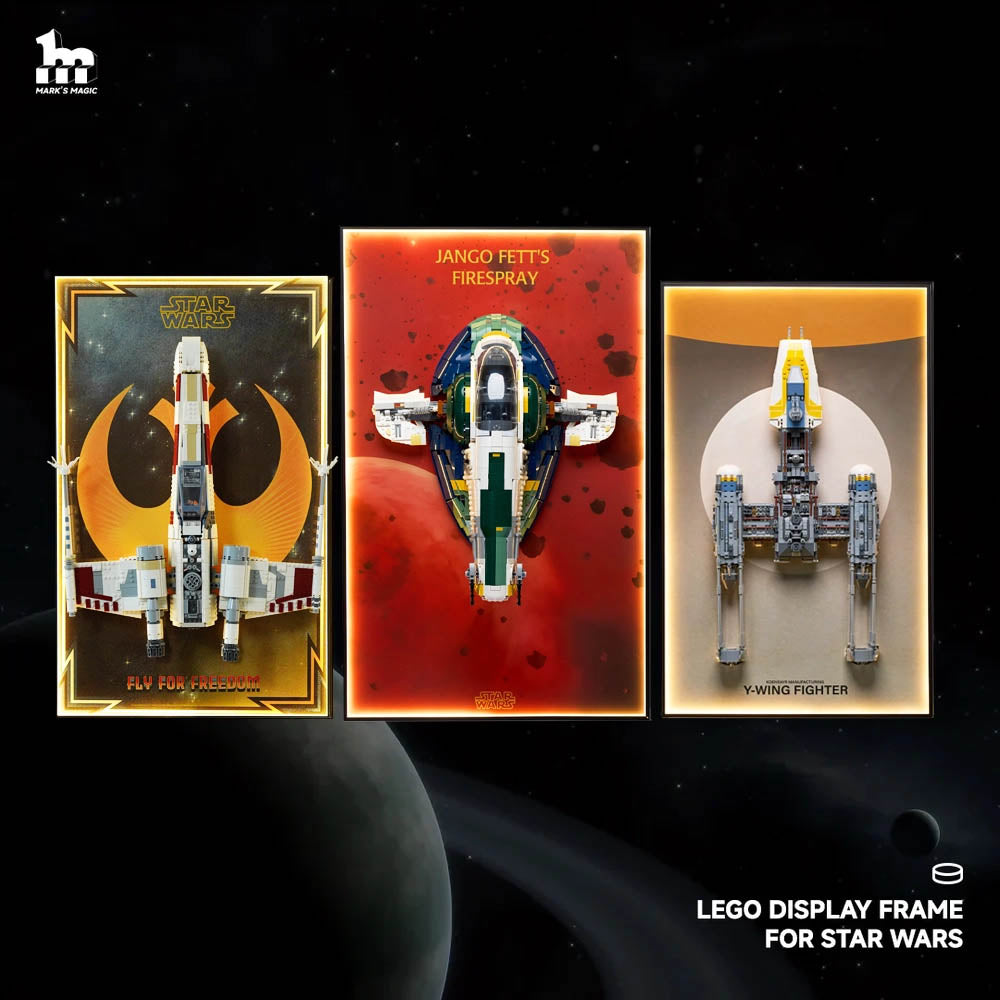
Pour les collectionneurs qui constituent une collection plus vaste LEGO Icons Pour une collection automobile murale, les présentations encadrées créent également de l’ordre. Les voitures peuvent être regroupées par marque, pays, époque ou style de design tout en conservant leur identité propre.
La Jaguar E-Type devient partie intégrante d’une collection sans s’y fondre.
Une vitrine en acrylique préserve la silhouette complète
Un cadre mural met l’accent sur la composition. Une vitrine en acrylique préserve l’expérience visuelle de la Jaguar en tant que modèle tridimensionnel complet.
La Vitrine en acrylique pour la LEGO Icons 11381 Jaguar E-Type permet de voir la voiture de face, de côté et d’en haut. Il offre également aux collectionneurs davantage de liberté pour ajuster l’angle ou ouvrir l’un des éléments du modèle.

Son arrière-plan dédié utilise des lignes visuelles fluides qui reprennent les courbes de la carrosserie de l’E-Type. Plutôt que d’ajouter une décoration superflue, le design suit la direction du capot, du cockpit et de la courbe arrière.
Cela aide à guider le regard le long du modèle et renforce la sensation de mouvement déjà présente dans la forme de la voiture.
Des lignes d’arrière-plan fluides maintiennent l’attention sur la carrosserie
Une boîte transparente basique peut protéger un modèle, mais elle peut aussi laisser apparaître tout ce qui se trouve derrière : murs, étagères, câbles, livres ou autres ensembles.
Un arrière-plan conçu à cet effet élimine cette pollution visuelle.
Les lignes fluides créent un cadre plus épuré pour la LEGO Jaguar et donnent à la carrosserie une apparence plus continue. Positionner la voiture légèrement de biais peut renforcer cet effet, en permettant de voir la roue avant, le capot, le cockpit et l’arche arrière dans une même perspective.
Le résultat évoque davantage une petite exposition automobile qu’une simple présentation sur une étagère.
La protection contre la poussière compte au fil du temps
La protection en acrylique résout également un problème pratique.

LEGO 11381 comporte plusieurs zones difficiles à nettoyer une fois la poussière installée : les roues, le cockpit, le volant, le compartiment moteur et les interstices étroits entre les panneaux de carrosserie. Les manipulations fréquentes peuvent également laisser des traces de doigts sur la surface vert foncé ou déplacer de petits détails.
Une vitrine réduit l’exposition directe à la poussière et diminue le besoin de nettoyages fréquents. Elle ne rend pas le modèle exempt d’entretien, mais contribue à préserver une apparence plus propre avec moins de manipulations.
Cela est particulièrement précieux pour un modèle destiné à rester exposé pendant des mois ou des années.
Une présentation réussie ne doit pas seulement être belle le jour où la construction est terminée. Elle doit rester agréable à regarder au fil du temps.
Ne pas ouvrir tous les éléments en même temps
La Jaguar comprend plusieurs éléments mobiles, mais les montrer tous simultanément peut interrompre la forme qui rend la voiture distinctive.
Ouvrir le capot, les deux portières et le compartiment arrière peut révéler davantage la construction, mais cela rompt aussi la ligne continue de la carrosserie.
Une mise en scène plus ciblée fonctionne généralement mieux.
Pour mettre le moteur en valeur, ouvrez le capot et gardez les autres panneaux fermés. Pour montrer l’habitacle, entrouvrez une seule portière tout en préservant le reste de la silhouette.
Pour une présentation murale, une carrosserie fermée est généralement le meilleur choix, car elle préserve la silhouette.
Dans une vitrine en acrylique, un élément ouvert peut ajouter de l’intérêt sans donner au modèle un aspect visuellement fragmenté.
Présenter une voiture LEGO ne consiste pas à révéler toutes ses fonctions en même temps. Il s’agit de décider de ce que le spectateur doit remarquer en premier.
Utiliser une lumière douce sur la carrosserie vert foncé

La finition vert profond change sensiblement selon les conditions d’éclairage.
Une lumière blanche froide peut lui donner une apparence plus nette et légèrement plus bleutée. Une lumière chaude crée une tonalité plus traditionnelle et vintage. Un éclairage direct puissant peut toutefois accentuer les reflets et donner un aspect irrégulier aux sections courbes.
Une lumière douce venant d’en haut ou légèrement de côté est généralement plus flatteuse. Elle permet à la luminosité de suivre le capot et les panneaux latéraux, ce qui contribue à donner un aspect plus naturel aux courbes.
Avec le cadre mural, l’éclairage peut mettre en valeur le fond en dégradé et détacher la voiture du graphisme situé derrière elle. Le logo Jaguar doit rester visible sans être plus lumineux que le modèle lui-même.

Avec la vitrine en acrylique, évitez de placer une lumière forte directement devant les panneaux transparents. Les reflets des lampes ou des bandes LED peuvent devenir plus visibles que la voiture.
Une orientation maîtrisée est plus utile qu’une luminosité maximale.
Créer un thème autour de la Jaguar
Il est peu probable que la LEGO 11381 reste la seule voiture Icons d’une collection sérieuse.
Cependant, disposer les véhicules uniquement par numéro de set ou par date d’achat crée rarement la présentation la plus réussie. Une disposition thématique donne davantage de sens à la collection.
La Jaguar peut être associée à d’autres voitures de sport classiques, à des modèles britanniques ou à des véhicules aux proportions caractérisées par un long capot. Cela transforme une rangée de modèles distincts en une comparaison visuelle des styles automobiles.
Les collectionneurs intéressés par Ensembles LEGO Jaguar Vous pouvez également utiliser un espace d’exposition dédié pour relier différentes créations inspirées de Jaguar grâce à des arrière-plans, des angles et un éclairage cohérents.
La cohérence compte.
Lorsque plusieurs voitures sont orientées dans des directions différentes, la présentation peut sembler désordonnée. Utiliser une vue latérale commune ou un angle de trois quarts crée un rythme plus intentionnel, semblable à celui d’une salle d’exposition.
Les cadres muraux sont particulièrement efficaces pour créer une galerie automobile plus vaste. Les vitrines en acrylique conviennent mieux à un nombre réduit de modèles qui méritent un espace d’exposition individuel et une vue tridimensionnelle.
Cadre mural ou vitrine en acrylique ?
Choisissez le cadre mural lorsque l’identité de marque, la présentation graphique et l’optimisation de l’espace sont prioritaires.
Le logo Jaguar rend immédiatement le sujet reconnaissable, tandis que l’arrière-plan texturé en dégradé apporte profondeur et contraste à la carrosserie vert foncé. Le résultat évoque une œuvre d’art automobile murale construite autour d’un véritable modèle LEGO.
Choisissez la vitrine en acrylique lorsque vous souhaitez préserver la forme tridimensionnelle de la voiture et l’observer sous plusieurs angles.
Les lignes fluides de l’arrière-plan complètent la forme de l’E-Type, tandis que le couvercle transparent réduit la poussière autour de l’habitacle, du moteur, des roues et de la carrosserie.
En termes simples :
Le cadre mural met en valeur le logo Jaguar, arrière-plan en dégradé et identité visuelle.
La vitrine en acrylique met en valeur les lignes fluides de la carrosserie, vue tridimensionnelle et protection contre la poussière.
Le choix dépend du rôle que vous souhaitez faire jouer au modèle dans la pièce.
Elle peut devenir une célébration encadrée du design Jaguar, ou rester un modèle réduit soigneusement protégé qui récompense un examen attentif.
Réflexions finales
L’élément le plus important d’une présentation de la Jaguar E-Type n’est pas le nombre de détails qu’elle révèle. C’est la clarté avec laquelle elle communique le caractère de la voiture.
Le long capot, l’habitacle bas, la carrosserie arrière arrondie et la finition vert foncé devraient guider la composition.
Un cadre mural utilise le logo Jaguar et un arrière-plan texturé en dégradé pour transformer ces qualités en une véritable œuvre d’art automobile murale.
Une vitrine en acrylique utilise des lignes de fond fluides pour souligner la silhouette de la voiture tout en contribuant à protéger ses surfaces détaillées de la poussière.
Quelle que soit l’option choisie, évitez de traiter la voiture Jaguar LEGO comme un simple modèle qui aurait seulement besoin d’une étagère disponible.
Laissez de l’espace à la silhouette. Choisissez un angle avec intention. Utilisez la lumière pour révéler les courbes plutôt que les aplatir.
Un présentoir LEGO 11381 Jaguar E-Type bien pensé devrait faire plus que montrer que le modèle a été assemblé. Il devrait expliquer clairement pourquoi ce modèle particulier Jaguar E-Type mérite d’être vu.

Ecrit par MaZhiyuan






Laisser un commentaire
Ce site est protégé par hCaptcha, et la Politique de confidentialité et les Conditions de service de hCaptcha s’appliquent.