
LEGO Room Ideas for Adults: How to Create a Stylish Collector Space|Mark's Magic
A LEGO collection has a way of growing beyond the shelf you originally planned for it.
One finished build becomes five. A few favorite cars turn into a full racing collection. Before long, the real question is no longer what to build next, but how to create a space where everything actually looks like it belongs.
The best LEGO room ideas for adults are not about filling every available surface with bricks. They are about creating a room that works for your collection, your home, and the way you want your builds to be seen.

Whether you have a dedicated hobby room, a home office, or just one free wall, thoughtful planning can turn a growing LEGO collection into part of the interior rather than something competing with it.
Before Planning Your LEGO Room, Start With Your Collection
A good LEGO room should be designed around the collection rather than the other way around.
Before buying another shelf or moving furniture, consider three things: what you collect, how much space you have, and what you actually use the room for.


How Large Is Your LEGO Collection?
A collection of five favorite models needs a very different setup from a collection that grows every month.
For a smaller collection, individual builds can each have their own visual space. One Technic car above a desk or one large Star Wars model on a dedicated surface may be enough to define the room.
Larger collections need more structure.
Instead of asking, “Where can I fit another set?” think about how the collection could be divided into zones, themes, or levels of importance.
It also helps to leave some room for future builds. A display that looks perfectly full today can feel crowded as soon as your next set is finished.
What Kind of LEGO Do You Collect?
The theme and proportions of your collection should influence your LEGO room design.
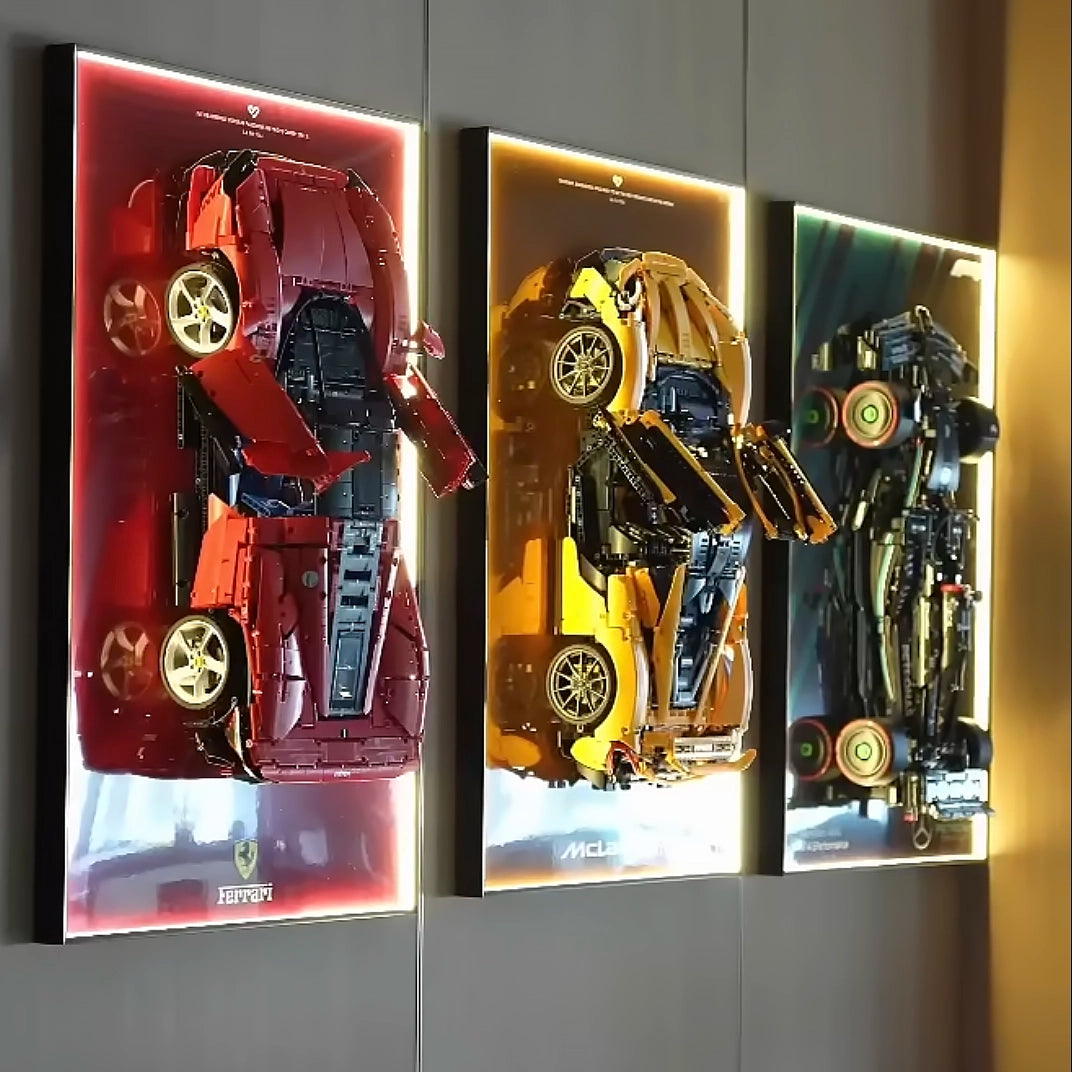
Technic cars and Formula 1 models have long horizontal silhouettes that work well in repeated rows or wall displays.

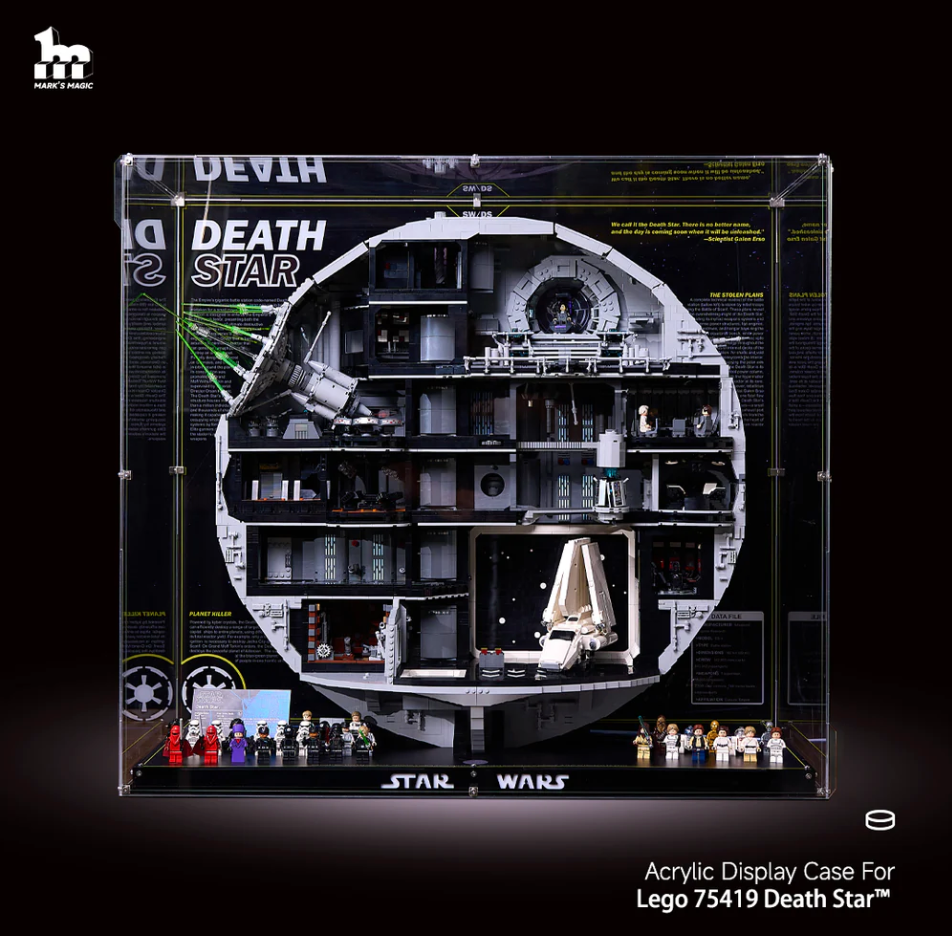
Star Wars collections may combine large ships with helmets and smaller dioramas. LEGO Art naturally fits into wall-focused interiors, while LEGO Icons can often blend into bookshelves and living spaces.

A mixed collection needs another approach: consistency should come from the room itself rather than from the LEGO sets.
Matching frames, shelving, spacing, backgrounds, and lighting can make very different themes feel like part of one collection.
Is the Room for Building, Displaying, or Both?
Not every LEGO space is a dedicated display room.
Some collectors need a large building table. Others want LEGO around a home office without losing useful workspace. A dedicated collector room may need display, building, and storage areas all at once.
Deciding the room's main purpose early makes every later choice easier.
LEGO Display Room Ideas for Adult Collectors
There is no single ideal LEGO room setup. The best layout depends on the amount of space you have and how much visual attention you want your collection to receive.
Here are several layouts that work particularly well for adult collections.
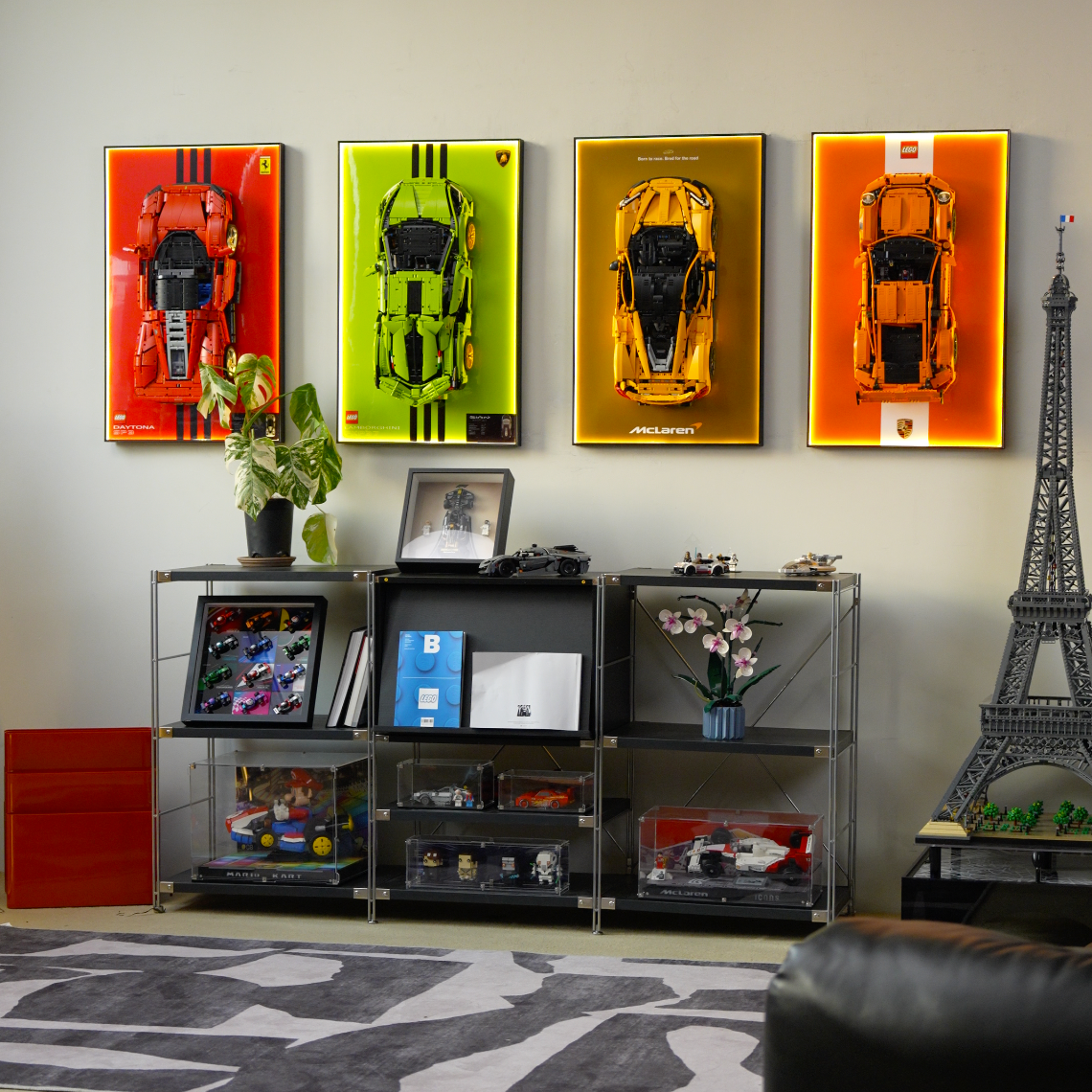
1. Create a LEGO Feature Wall
One of the simplest ways to give a collection more presence is to concentrate it on a single wall.
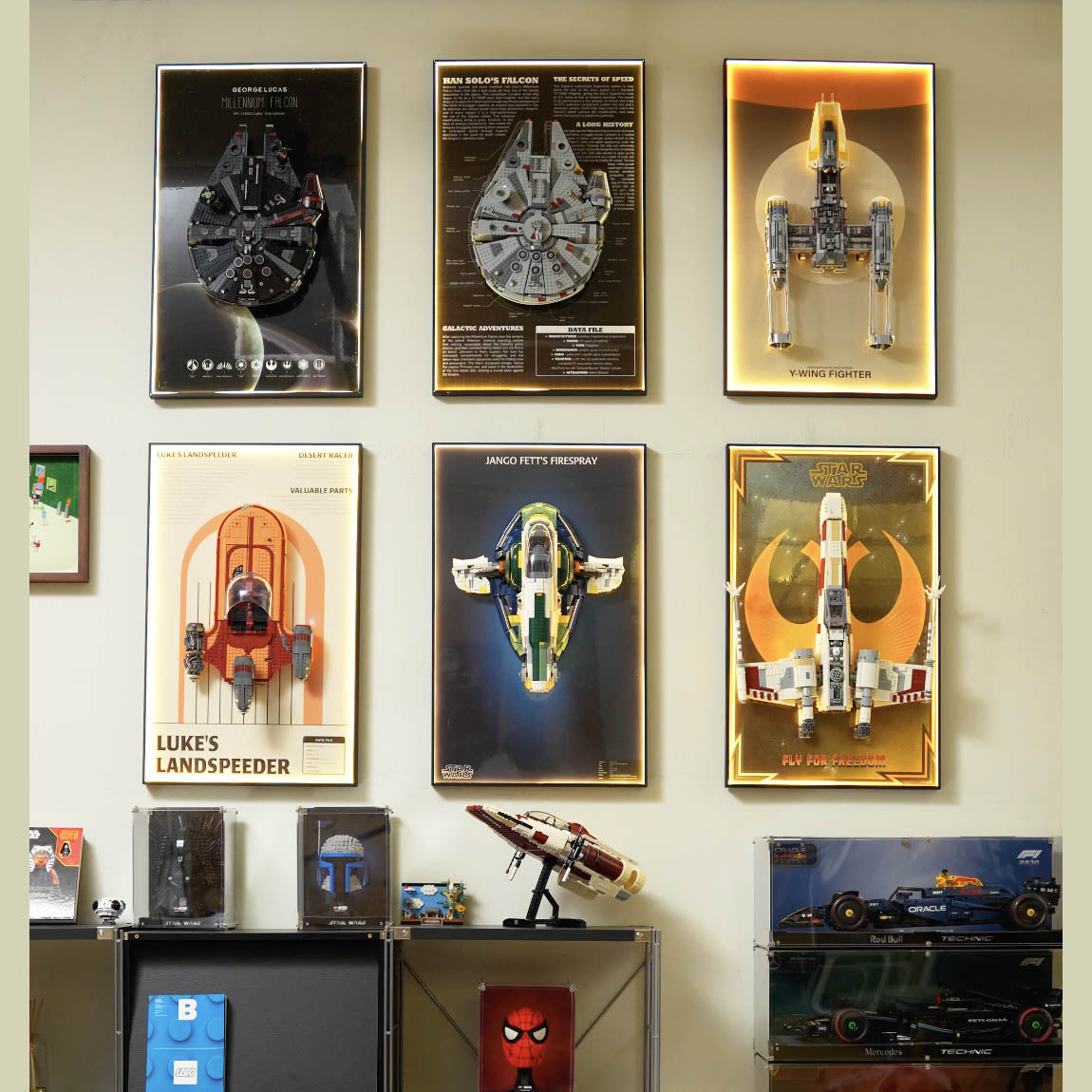
Rather than placing individual builds throughout the room, a feature wall creates one clear visual destination. It can combine wall-mounted LEGO displays, floating shelves, framed artwork, lighting, and a few larger statement pieces.

The key is not filling every gap.
A feature wall usually looks stronger when the builds have enough breathing room to be viewed individually. Consistent spacing also makes it much easier to add new pieces later.
Wall displays are especially useful when floor or shelf space is limited because they turn unused vertical space into part of the collection.
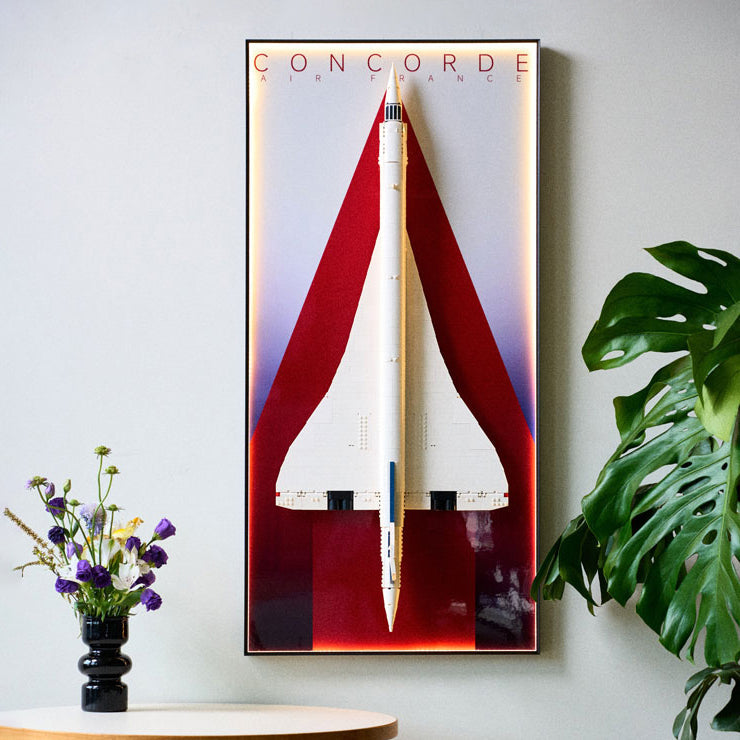
For builds suited to vertical presentation, a LEGO display frame can also give the wall a more consistent gallery-like structure without adding more furniture to the room.
2. Bring LEGO Into a Home Office
A LEGO room does not have to be a separate room.
For many adult collectors, the home office is already where hobbies, design objects, books, and personal interests meet.

The challenge is keeping the desk functional.
Instead of surrounding the computer with multiple sets, choose one or two smaller builds as desktop accents and move the rest of the collection onto shelves or the wall behind the workspace.
Think of the desk as the foreground and your LEGO display as the background.
A carefully arranged Technic car, LEGO Art piece, or Icons model can add personality without making the room feel like permanent storage.
3. Make a Small LEGO Room Feel Bigger
Small LEGO room ideas should focus less on adding storage and more on using the available space better.
Start vertically.

The space above a desk, cabinet, or low shelf often has more display potential than another piece of floor-standing furniture. Wall-mounted displays, narrow vertical shelving, and carefully planned gallery arrangements can keep the room open while still giving the collection plenty of presence.


It is also worth being selective.
A small room with five well-presented builds often feels more intentional than one containing twenty models competing for attention.
Collections can always be rotated. Not every finished set has to remain on permanent display.

4. Divide a Dedicated LEGO Room Into Zones
A dedicated LEGO collector room gives you more freedom, but more space does not automatically create a better display.
Dividing the room into functional zones helps.
One area can be reserved for building, with a comfortable table and easy access to parts. Another can focus entirely on finished sets. Storage for boxes, instructions, loose pieces, or builds that are currently out of rotation can stay visually separate.

Then create a feature zone for the models you care about most.
That could be a flagship UCS set, a row of 1:8 Technic supercars, a large Icons build, or an entire themed wall.
Giving every part of the room a purpose keeps a large collection from becoming one continuous wall of LEGO.
5. Use LEGO in a Shared Living Space
LEGO does not have to stay inside a hobby room.

A carefully selected model can work well in a living room, study, hallway, or shared family space when it is treated like part of the interior.

The difference is restraint.
Instead of displaying an entire collection, choose a few pieces that complement the room. A botanical set, architectural build, classic vehicle, or visually distinctive Icons model can sit alongside books, artwork, or other decorative objects.

The goal is not to make the entire room LEGO-themed.
It is to make the build feel intentionally placed.
LEGO Themed Room Ideas for Different Collections
A themed room can create a stronger sense of identity, especially when most of your collection comes from the same LEGO universe.
But a theme does not need to mean matching wallpaper, furniture, and decorations everywhere.
For an adult collector space, the models themselves can do most of the work.
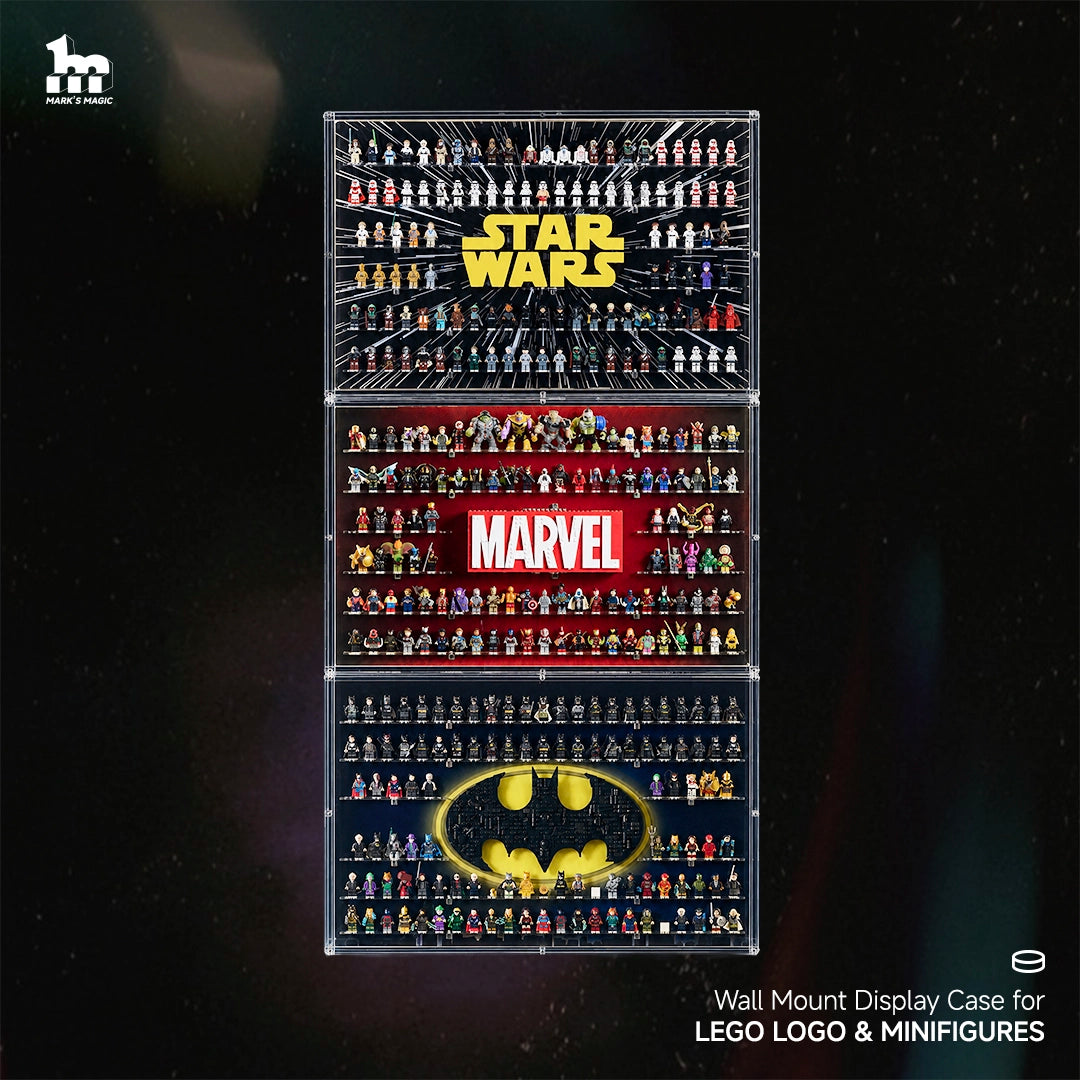
Star Wars LEGO Room
Star Wars collections often contain very different types of builds, which makes visual hierarchy especially important.

A large ship can become the hero piece, while helmets, dioramas, and smaller models form supporting displays around it.
Try not to give every model equal visual weight.
A single large build with generous space around it can make a stronger impression than several flagship sets crowded onto the same surface.

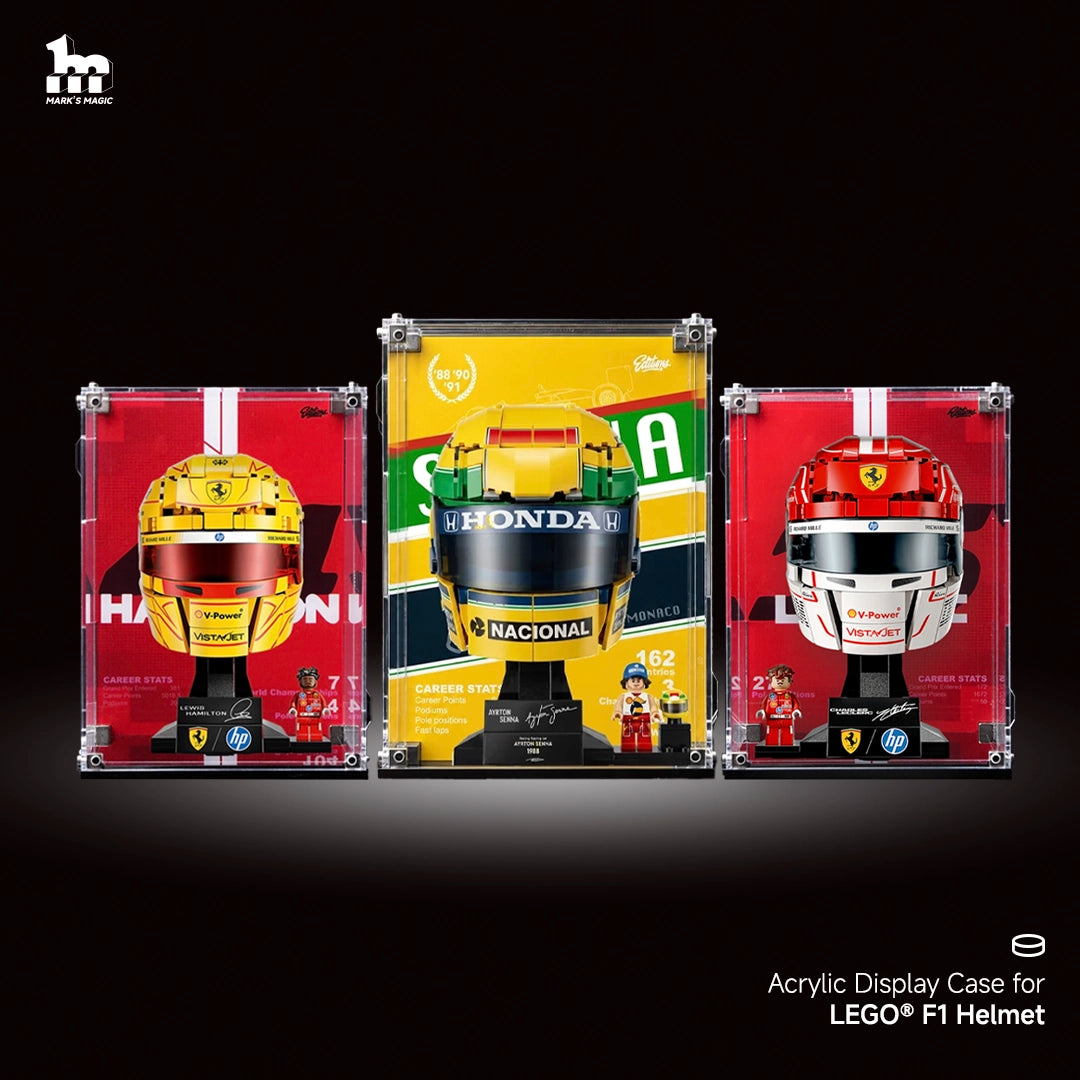
Smaller repeating collections such as helmets work well in a grid because their consistent dimensions create a natural rhythm.

Dark or neutral backgrounds can help the silhouettes stand out without requiring the whole room to become heavily themed.
Technic and F1 LEGO Room

LEGO cars are ideal for collection-based room design because their proportions naturally lend themselves to repetition.

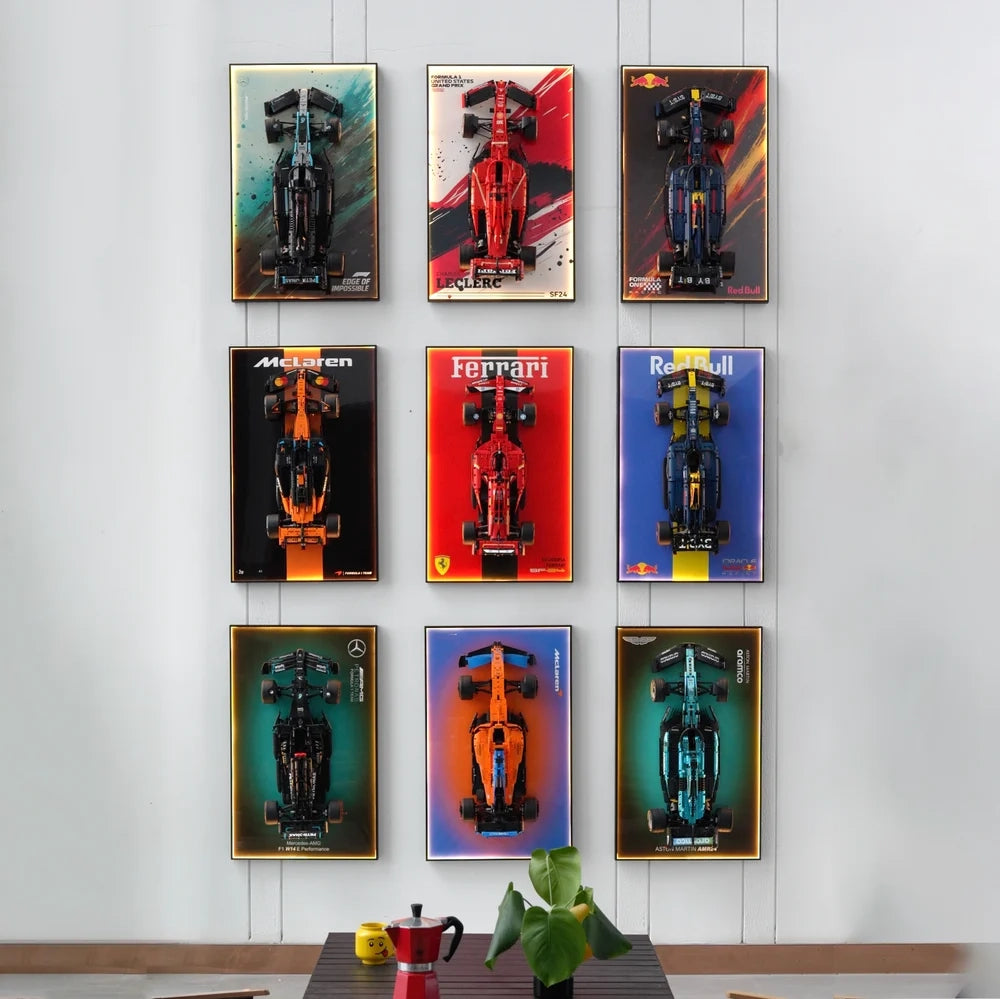
A row of cars displayed at a consistent angle can create an almost gallery-like effect.
There are several ways to organize them.
You could build a symmetrical grid, dedicate the wall to one racing series, arrange cars by manufacturer, or choose one larger car as the hero while smaller models support it.
Side profiles are particularly important for many vehicle builds, so think about the viewing angle before choosing a shelf, case, or wall-mounted solution.

Collectors working with multiple vehicles may also find it useful to keep the presentation consistent even when the cars themselves have very different colors.
Matching backgrounds and spacing help the cars remain the focus.
For a more detailed vehicle-specific setup, Mark's Magic already has a guide to displaying LEGO cars at home. How to Display LEGO Cars at Home
LEGO Icons and Art Room


LEGO Icons and LEGO Art can integrate especially well with mature interiors because many of these builds already function visually like decorative objects.
The room does not need to shout “LEGO.”
A botanical build can sit alongside ceramics or books. A vehicle can act as a centerpiece on a console. LEGO Art can become part of an existing gallery wall.
Keep the surrounding colors simple and let the model provide the detail.
Mixed LEGO Collection Room
A mixed collection can be harder to organize because Star Wars, Technic, Marvel, Architecture, and Icons may have little visual connection.
Do not try to force the sets themselves to match.
Instead, create consistency through the display system.
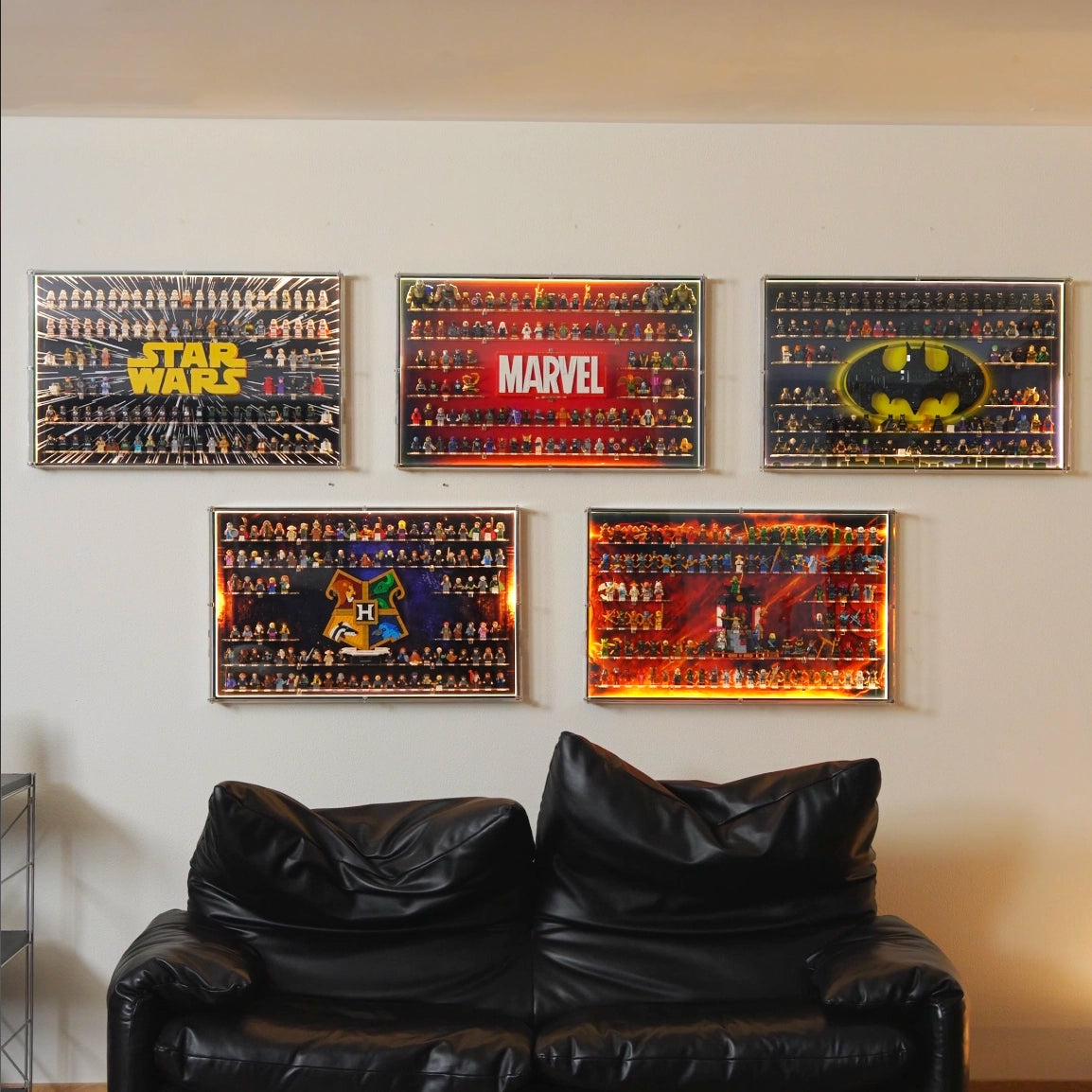
Use the same frame style, similar shelf finishes, repeated spacing, or consistent lighting throughout the room.
Another option is to divide the collection into clear zones.
One section could hold vehicles, another sci-fi models, and another smaller decorative sets. The room still feels cohesive because every theme has a defined place.
Wall Display vs Shelves vs Display Cases: Which Works Best?
One of the most useful decisions in a LEGO display room is knowing which models belong where.
You do not need to choose one display method for the entire collection.
In fact, combining several usually produces a better result.
Wall Displays

Wall displays work well when floor space is limited or when a set has a strong profile that can be appreciated from a fixed viewing angle.
They can also create a strong collection rhythm when multiple pieces are arranged together.
Cars, selected ships, artwork, and other display-friendly builds are natural candidates.
Shelves

Shelves offer flexibility.
They are useful for collections that change often and for models you prefer to view from different angles or pick up occasionally.
Their biggest weakness is also their flexibility: it is easy to keep adding models until the shelf looks crowded.
Treat each shelf as a composition rather than a storage surface.
If shelving will form the backbone of your collector room, our LEGO Display Shelves guide explains how to choose depth, spacing, load capacity, and shelf type.
Display Cases

A display case gives an individual model or smaller collection a visually defined space.
That can be particularly useful for a centerpiece that deserves separation from everything around it.
Cases also work well when a model has depth and looks best from more than one direction.
If you are considering enclosed protection for selected centerpiece models, our Ultimate LEGO Display Case Guide covers case size, acrylic, UV protection, lighting, and mounting styles.
Desktop Displays
The desktop should usually be the most selective area.
Choose models you enjoy seeing up close and leave enough space for the desk to remain useful.
A single favorite model often makes a better desktop display than an entire collection.
For a broader comparison of these display methods, the existing Mark's Magic collector guide covers desk, shelf, wall, lighting, and collection planning in more detail. How to Display LEGO Sets: The Complete Collector’s Guide
LEGO Room Decor Ideas That Feel More Grown-Up
Making an adult LEGO room look polished is not about hiding the fact that you collect LEGO.
It is about giving the collection enough structure to look intentional.
Reduce Visual Noise

Not every set needs to be the centerpiece.
Choose a small number of hero builds and allow the rest to support them.
This creates a visual hierarchy and makes the room easier to take in.
When every model is asking for attention at once, even an impressive collection can become difficult to appreciate.
Keep the Display Language Consistent
Your LEGO may contain every color imaginable, which is exactly why the furniture and display system often benefit from restraint.
Black, white, wood, and other neutral finishes can give colorful builds a cleaner background.
Matching frames or shelving can also connect sets from completely different themes.
Consistency does not mean everything needs to look identical. It simply gives the eye something stable while the LEGO provides the personality.
How to Plan Lighting for a LEGO Room
Lighting can completely change the way a collection feels, but more light is not always better.
A strong setup usually works in layers.
Start With Ambient Lighting
Ambient light is simply the room's everyday illumination.
It should make the space comfortable to use without relying on individual display lights.
Good ambient lighting also prevents illuminated models from feeling disconnected from the rest of the room.
Add Accent Lighting to Key Displays

Accent lighting draws attention to selected builds.
Instead of lighting every model equally, use it where you want the eye to go first.
A flagship car, large ship, or architectural centerpiece can benefit from extra emphasis, while supporting models remain more subtle.
Consider Integrated Display Lighting
For a cleaner look, lighting can become part of the display itself.
Illuminated shelves, cases, and selected display frames can create a more controlled effect than adding unrelated lamps around the room.
The goal should be to reveal shape, texture, and depth—not overpower the colors of the model.
How to Design a LEGO Room That Can Grow With Your Collection
A good LEGO room should work for more than the collection you own today.
That does not mean leaving half the room empty. It means choosing a system that can expand without forcing you to redesign everything every time you finish a new set.
Leave Room to Expand
Avoid filling every shelf, wall, and case immediately.
A little empty space gives future additions somewhere to go and keeps the current collection from looking crowded.
It also gives you flexibility when a future model is much larger than expected.
Use Repeatable Display Formats
Modular systems are easier to grow.
Repeated frame sizes, consistent shelf spacing, grid layouts, or a standard background style make future additions feel like part of the original plan.
This is particularly effective for cars, helmets, and other series that collectors are likely to expand over time.
Rotate Your Collection
A model does not need to stay on display forever just because it has been built.
Rotating displays can make a smaller room feel fresh and allow more of the collection to have its moment.
You might rotate by theme, season, new release, or simply by what you are enjoying most at the time.
A curated collection often makes a stronger impression than an exhaustive one.
Final Thoughts: Build the Room Around What You Want to See
The best LEGO room ideas for adults have less to do with how many sets you own and more to do with how intentionally you present them.
A large collection may benefit from separate zones and repeatable display systems. A small room may work better with vertical displays and a rotating group of favorites. A home office might need only one carefully chosen centerpiece.
Shelves, display cases, and wall-mounted display frames all solve different problems. The right combination depends on the models you collect, how much room you have, and which builds deserve to become the visual focus.
You spent time choosing and building the collection.
The room should give it the space to be seen.
Let your build be seen.


Written by MaZhiyuan













1 comment
Very insightful content with useful examples. I appreciate the effort you put into writing this article. Keep sharing your valuable knowledge.
Interior Designers in Chennai
false ceiling Interior Designers in Chennai
hospital Interior Designers in Chennai
hotel Interior Designers in Chennai
mirshika k
Leave a comment
This site is protected by hCaptcha and the hCaptcha Privacy Policy and Terms of Service apply.