
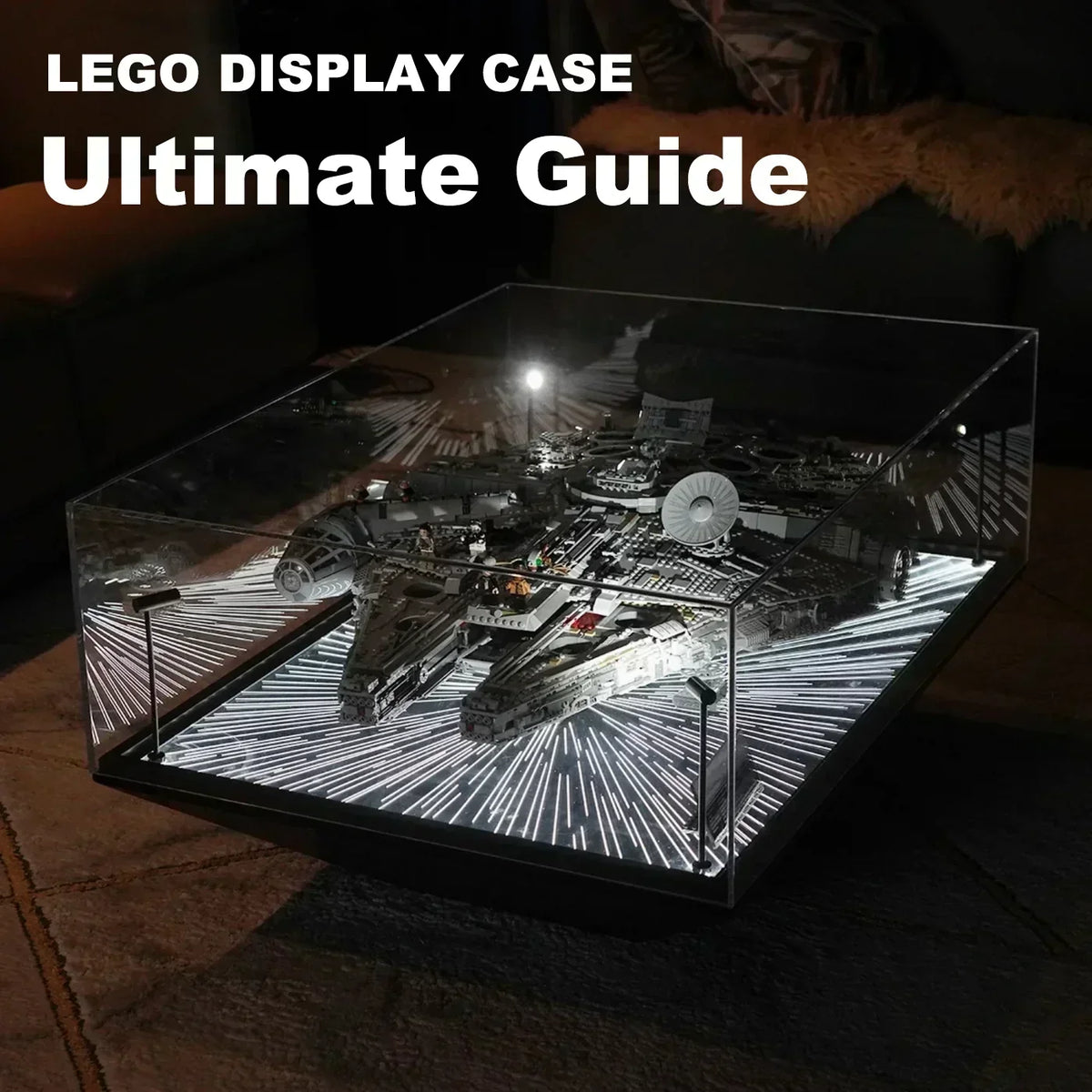
The Ultimate LEGO Display Case Guide: How to Choose the Right Case for Your Collection| Mark's Magic
Finishing a LEGO set is often only half of the experience.
For some collectors, an open shelf is enough. For others, dust, sunlight, limited shelf space, pets, children, or simply the desire for a more finished presentation make a LEGO display case worth considering.
But there is no single “best” LEGO display case for every collection.
A compact helmet, a wide Star Wars starfighter, a tall Disney castle, a Technic F1 car, and a wall of 100+ minifigures all create very different display requirements.
This is a fairly detailed guide, but that is intentional. Choosing a LEGO display case involves much more than checking whether the model fits inside it. Clearance, acrylic quality, dust protection, UV exposure, background design, lighting, mounting style, access, and even the room around the display can all affect the final result.
If you read through to the end, you should have a clear framework for deciding what type of display case actually makes sense for your collection—not simply which one looks best in a product photo.
As you read through the guide, feel free to click any display image that catches your eye. It will take you directly to the corresponding product page, where you can check the dimensions, materials, compatibility, and other details before deciding whether it fits your collection.

Quick Guide: What Should You Look for in a LEGO Display Case?
Before comparing styles, start with the practical requirements of your LEGO set.
The best place to start is always the LEGO model itself.

What to Consider When Choosing a LEGO Display Case
| What to Check | Why It Matters |
|---|---|
| Case dimensions & clearance | Determines how compact or spacious the final presentation feels |
| Model shape | Wings, antennas, spoilers and tall elements affect visual space |
| Acrylic quality | Affects clarity, rigidity and long-term appearance |
| Dust protection | Reduces cleaning and repeated handling |
| UV protection | Becomes more important for long-term display in bright environments |
| Background design | Can shift the display from minimal to cinematic |
| Base design | Changes viewing angles and overall presentation |
| Frameless or wood-framed | Changes how strongly the display becomes part of the room decor |
| Desktop or wall-mounted | Determines how much horizontal space the display uses |
| Lighting | Can reveal detail or create unwanted glare |
| Access | Matters if you frequently adjust or remove the model |
| Collection growth | Helps multiple displays work together over time |
The best place to start is not with a specific material or feature.
Start with how you want the finished LEGO set to look in your space.
What to Consider When Choosing a LEGO Display Case
1. Check the Display Case Dimensions and Clearance
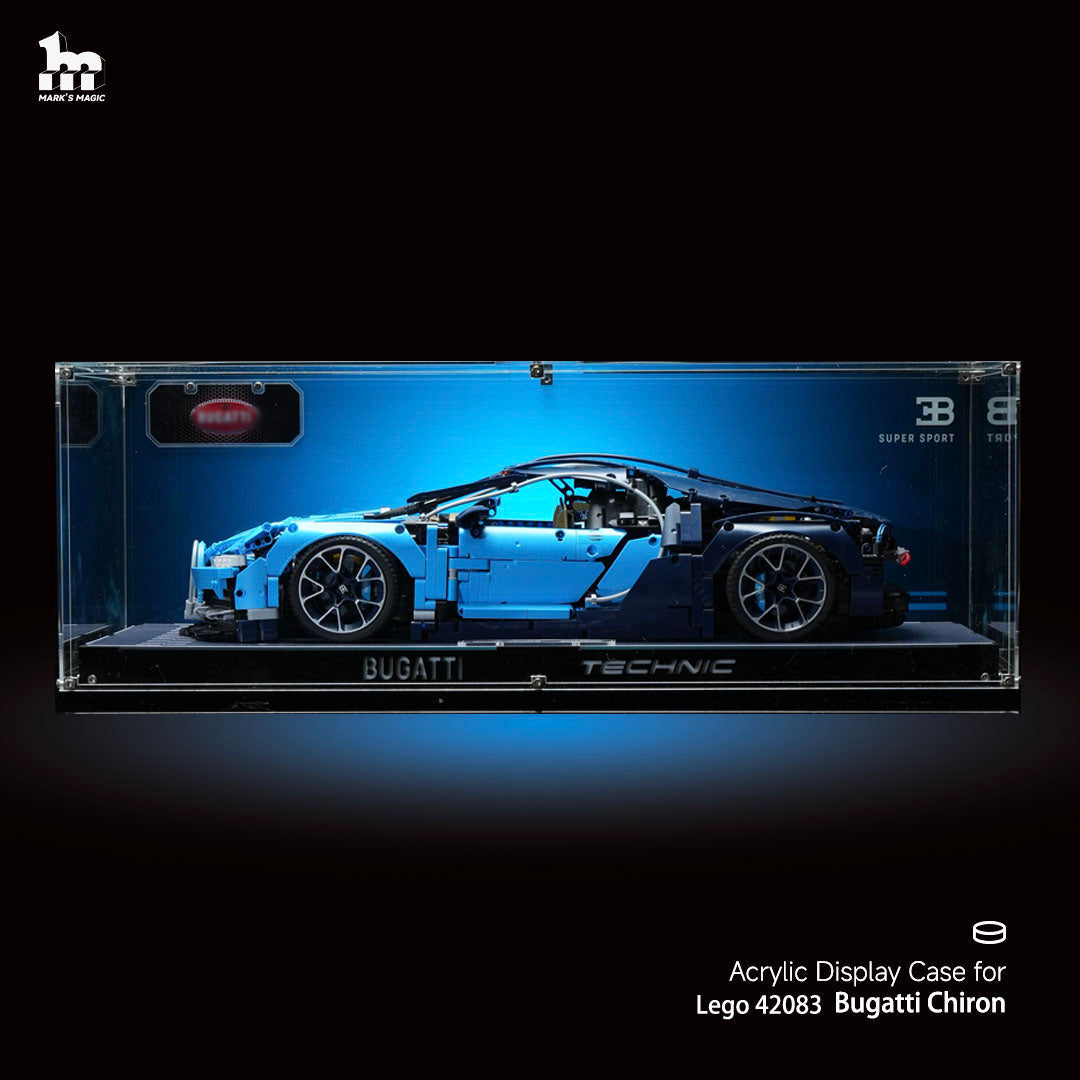
For model-specific LEGO display cases, the manufacturer has usually already measured the completed set and designed the case around its overall dimensions.
That means the more useful question is not simply:
“Will my LEGO set fit?”
but:
“How much space will be left around the model, and is that the presentation I want?”
When comparing two cases designed for the same LEGO set, look at:
- space above the model
- clearance around both sides
- distance between the model and front panel
- room around wings, antennas, spoilers or other extended elements
- how much of the base remains visible
- whether the model feels centered inside the enclosure
Two cases made for exactly the same LEGO set can create very different visual impressions.


A closely fitted case takes up less space and can feel compact and precise.
A slightly larger case creates more negative space and may make a premium collector set feel more like a standalone exhibit.
Neither approach is automatically better.
The right amount of clearance depends on:
- the model
- the available room
- the surrounding furniture
- the style of the rest of your collection
- your own preference for compact or gallery-style presentation
Quick tip: Do not judge case size from measurements alone. Product photos showing the actual LEGO model inside the case are often more useful for understanding how much visual breathing room the finished display provides.
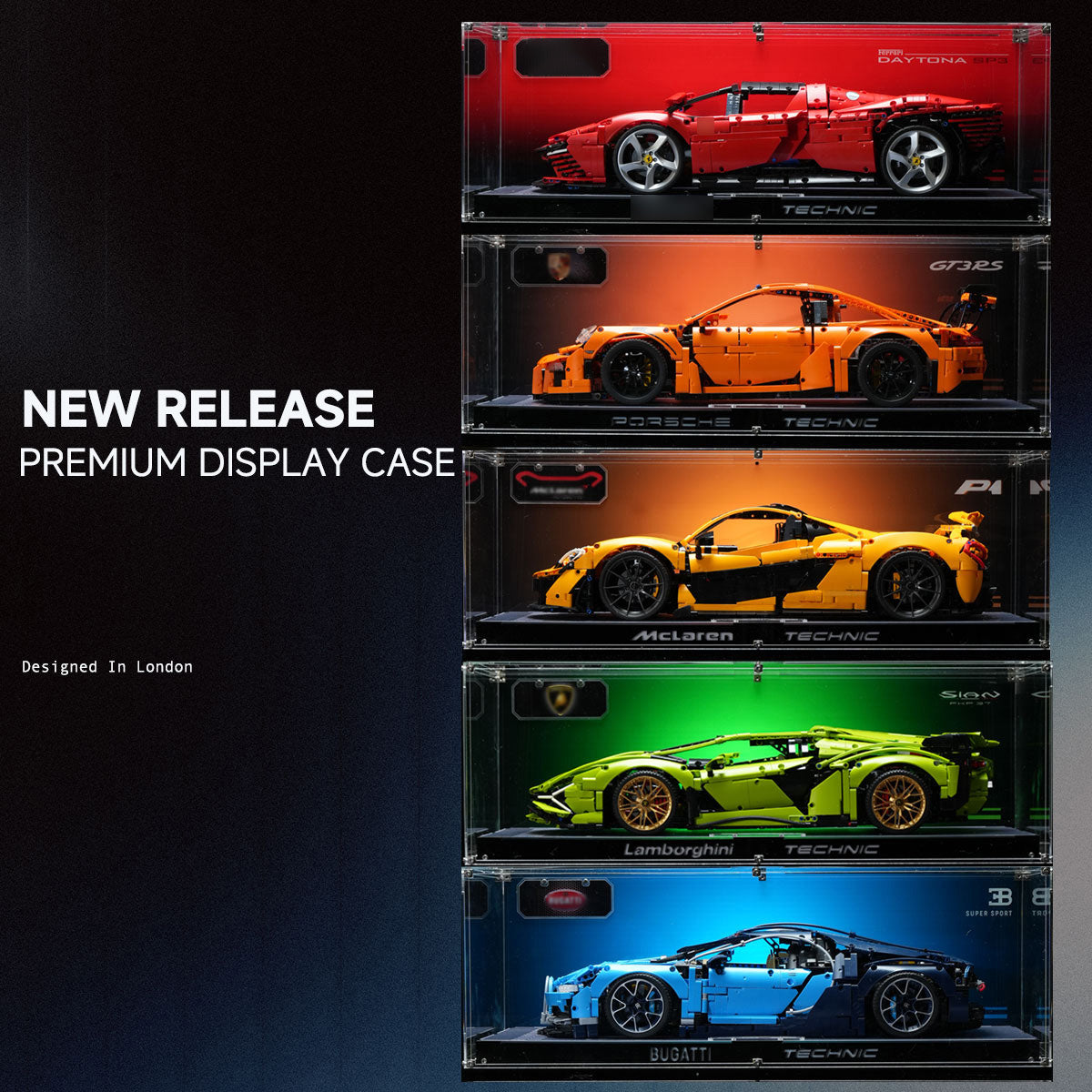
2. The Background Can Change the Entire Display
A display case does more than protect a LEGO model.
The background behind it can completely change how the finished display feels.


A completely clear display keeps the presentation minimal and allows the LEGO set to interact naturally with the room around it.
This can work especially well for collectors who prefer:
- clean interiors
- museum-style displays
- neutral rooms
- collections where the model itself should provide all the visual interest
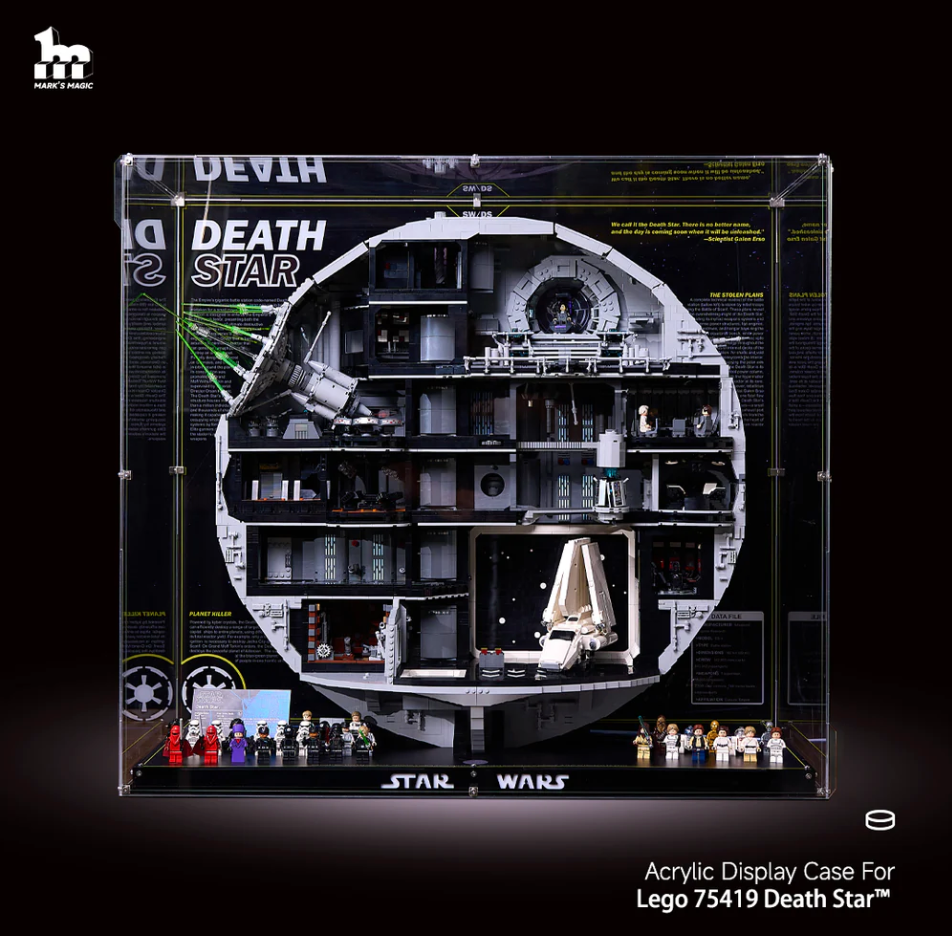
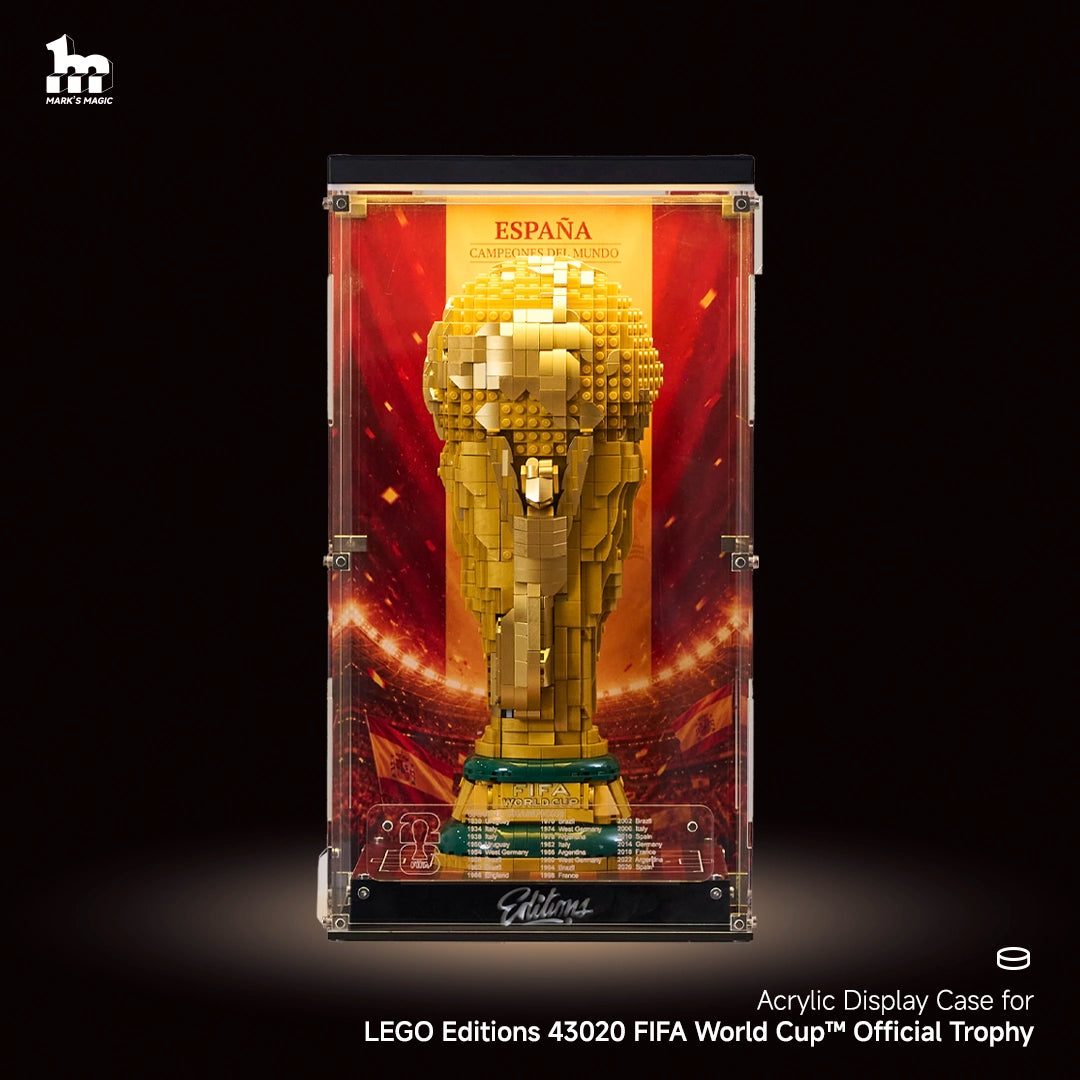
A themed background creates a different experience.
Instead of seeing only the LEGO model, you begin to read the model together with its environment.
For example:
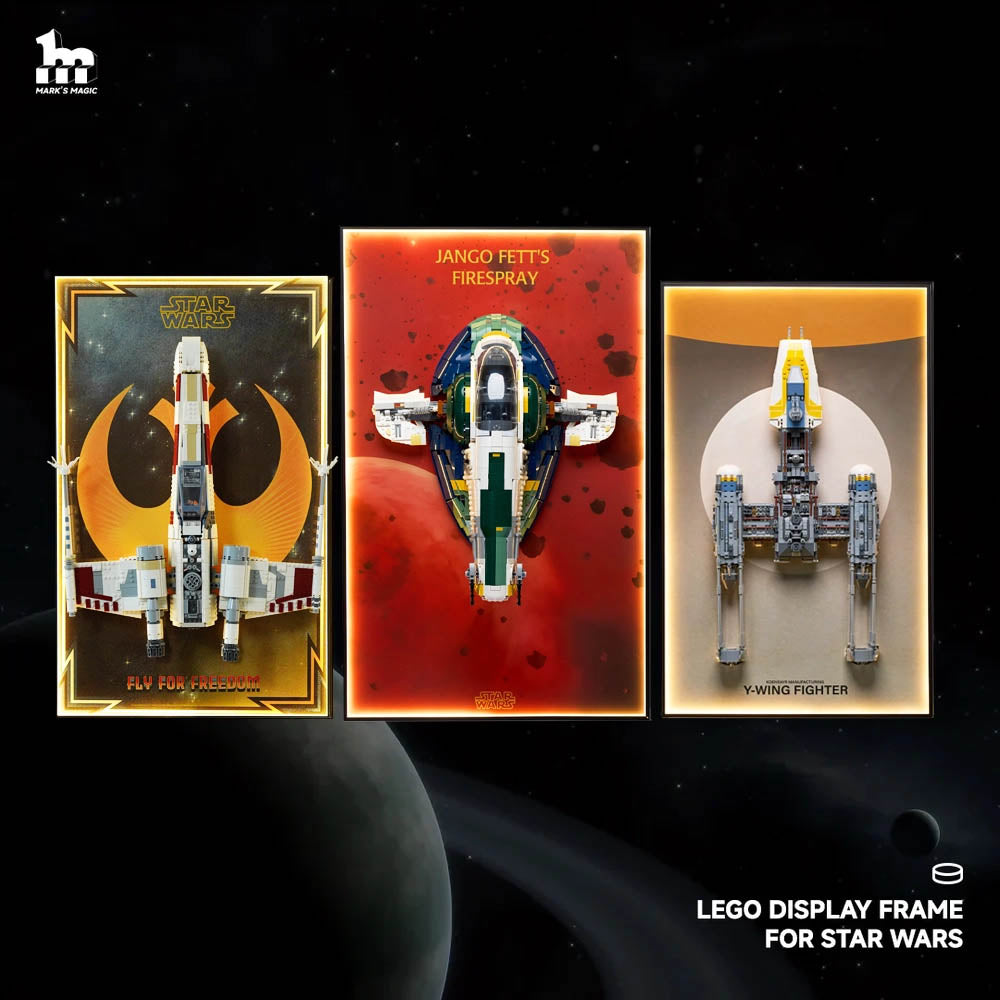
- a Star Wars ship can feel more cinematic against a space-inspired scene
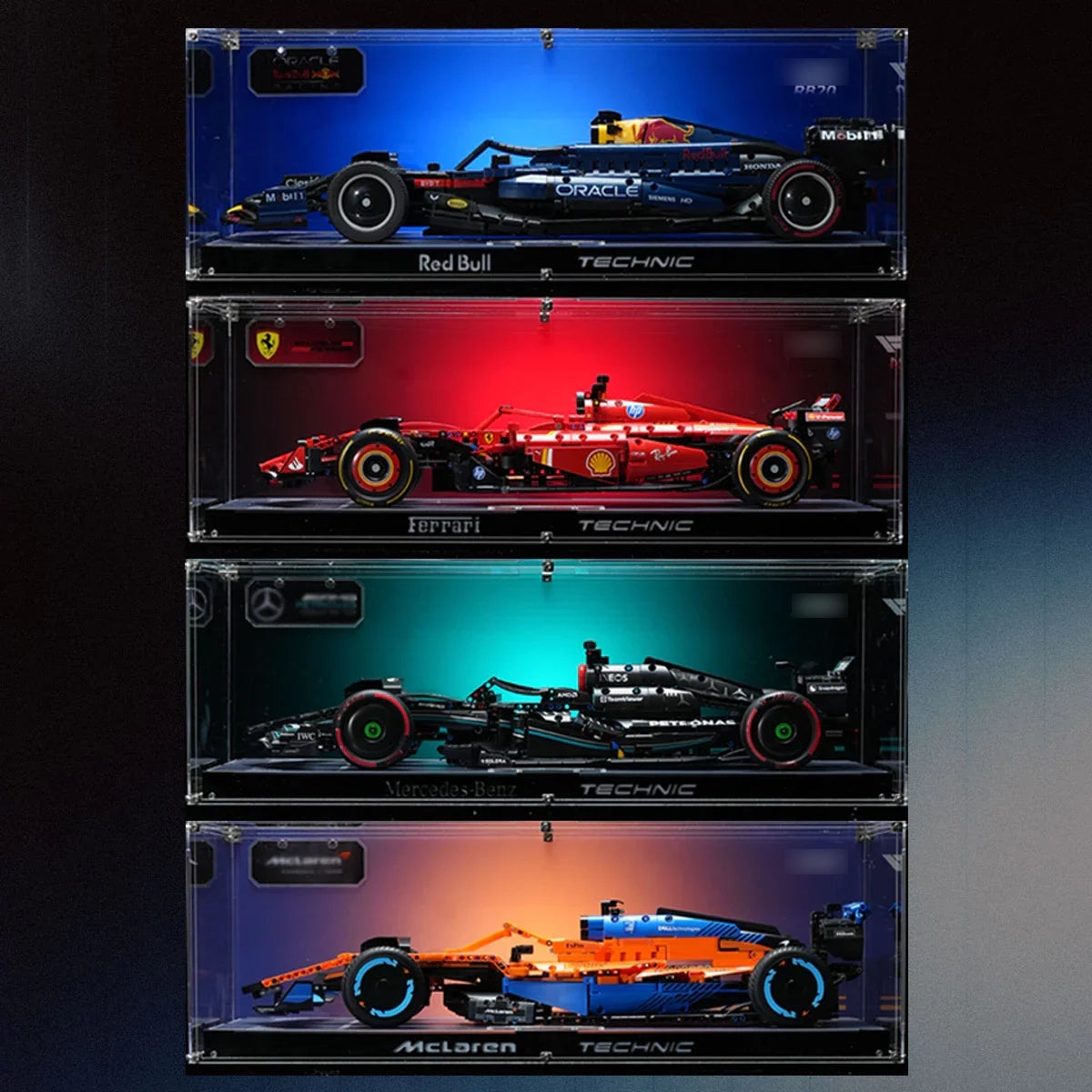
- an F1 car can take on a pit-lane or race-weekend atmosphere

- a Batman vehicle can feel more dramatic against a Gotham-inspired backdrop
- a Harry Potter build can feel more connected to the location or story it represents

The important question is not simply whether a background is included.
It is whether the background supports the LEGO model without competing with it.
When comparing background designs, consider:
Visual hierarchy
Is the LEGO set still the first thing your eye notices?
Color balance
Do the background colors complement the model, or do they make important details disappear?
Theme consistency
Does the artwork genuinely strengthen the story of the set, or is it simply decorative?
Long-term appeal
Will you still enjoy the background after the novelty wears off?
For a premium display, a good backdrop should feel like part of the composition rather than a poster placed behind the model.
Some collectors will always prefer a completely transparent enclosure.
Others enjoy a more cinematic presentation.
Both approaches can work.
The difference is whether you want the LEGO model to feel like an isolated object or part of a larger visual scene.
3. Look at Acrylic Quality, Not Just Thickness
Not all transparent display materials perform the same way.
One of the most common materials used in premium LEGO display cases is PMMA acrylic.
Good-quality acrylic can offer:
- high transparency
- relatively low weight
- good rigidity
- cleaner shipping than glass
- precise cutting and joining
- suitability for large custom-fit cases
- flexibility for wall-mounted designs
Thickness matters, but it should not be considered in isolation.
A thicker panel is not automatically a better case.
The overall result also depends on:
- panel dimensions
- acrylic grade
- joining method
- base construction
- case engineering
- support structure
Large panels may need greater rigidity than small cases, while compact displays can work perfectly well with thinner acrylic.

Rather than asking only:
“How thick is the acrylic?”
also ask:
“What material is it, how is the case constructed, and does the finished enclosure remain stable?”
4. Think About How Often You Access the LEGO Set
Some collectors complete a model and leave it untouched for years.
Others regularly:
- change minifigures
- reposition accessories
- replace batteries
- adjust lighting
- photograph the model
- rotate sets
- update seasonal displays
If you interact with your collection frequently, access becomes an important buying factor.
Display cases may use:
- lift-off covers
- removable panels
- magnetic doors
- sliding panels
- front-opening systems

- partially disassembled structures
A case that takes several minutes to open may be perfectly acceptable for a UCS display that rarely changes.
It may be frustrating for a minifigure collection that you update every month.
The access system should match the way you collect.
5. Look at the Base as Part of the Display
The base is easy to overlook, but it has a large influence on how the LEGO model is presented.
Common options include:
- clear acrylic bases

- solid-color bases
- printed bases


- mirrored bases
- dual-sided bases
- integrated themed artwork
A mirrored base can reveal areas underneath a vehicle, spacecraft, or architecture set that are normally difficult to see.
A printed base can help establish a scene.
A plain base keeps the presentation more neutral.
There is no universally better option.
Ask whether you want the display to feel more like:
a museum object
or
a complete scene.
Protection: Dust, UV Exposure & Long-Term Display

Protection is one of the main reasons collectors move from open shelves to enclosed display cases.
But it helps to separate the different types of protection rather than treating “protected” as one vague feature.
Dust and UV Protection
An enclosed display case helps reduce everyday dust, especially for detailed LEGO sets that are difficult to clean without moving small parts or accessories.

For long-term display, however, UV exposure is often the more important consideration. LEGO sets displayed near windows or in bright rooms may be exposed to sunlight for years, so the quality and UV-filtering performance of the acrylic become particularly relevant.
If you already use open shelving, you do not necessarily need to replace the entire setup with glass doors. Individual acrylic cases can protect selected collector sets from dust while also providing an additional layer of UV protection.
For valuable or long-term displays, we recommend looking beyond simple claims such as “clear acrylic” and checking whether the material offers meaningful UV resistance or has supporting test data.
UV Protection: How Important Is It?
UV protection becomes increasingly relevant when a LEGO collection is intended to remain on display for years.

The first thing to understand is simple:
Strong direct sunlight is not an ideal long-term display environment for collectibles.
Before thinking about a UV-protective case, first think about where the collection is located.
Whenever possible:
- avoid prolonged direct sunlight
- pay attention to strong afternoon sun
- consider how sunlight changes throughout the year
- avoid placing important sets immediately beside bright windows
Not All Acrylic Provides the Same UV Protection
Acrylic itself should not automatically be treated as “100% UV-proof.”
Different grades of acrylic can transmit different amounts and wavelengths of ultraviolet radiation.
Some acrylic products are specifically formulated or tested for stronger UV filtering, while ordinary transparent plastic may provide much less protection.
If UV protection matters to you, look for:
- material specifications
- UV-transmittance information
- independent laboratory testing
- clearly stated testing conditions
This is more useful than a vague marketing phrase such as:
“100% UV protected.”
Even high-quality UV-resistant acrylic should be viewed as part of a broader long-term protection strategy rather than permission to leave a valuable LEGO set permanently in harsh direct sunlight.
The better approach is:
good-quality acrylic + meaningful UV filtering + sensible placement away from strong sunlight.
Will Acrylic Display Cases Turn Yellow?

This is another common concern.
High-quality PMMA is generally designed to maintain clarity far better than many lower-grade transparent plastics, but acrylic quality, UV exposure, heat, environmental conditions and unsuitable cleaning products can all affect how a clear display material ages.
For long-term display, material quality and sensible placement both matter.
Rather than going too deeply into polymer aging here, we have a separate guide explaining why some clear plastics yellow, how acrylic ages, and how to keep acrylic display cases clear for longer.
→ Read our guide to preventing acrylic display cases from yellowing
Acrylic vs Glass LEGO Display Cases
Both acrylic and glass can work well for LEGO displays.
Neither is universally better.
Acrylic Display Cases

Acrylic is generally:
- lighter
- easier to transport
- less likely to shatter
- easier to produce in model-specific dimensions
- suitable for many large enclosures
- practical for some wall-mounted designs
Potential disadvantages include:
- easier surface scratching if cleaned incorrectly
- large quality differences between acrylic grades
- thin panels may flex if poorly engineered
Glass Display Cases
Glass generally offers:
- strong scratch resistance
- a substantial furniture-like feel
- good optical clarity
Potential disadvantages include:
- greater weight
- breakage risk
- higher shipping difficulty
- less practicality for some large or wall-mounted displays
Glass can make excellent sense for permanent furniture such as a large display cabinet.
Acrylic is often more flexible for individual LEGO cases and model-specific display systems.
If you want a deeper comparison, read our full acrylic vs glass LEGO display case guide.
Wood-Framed LEGO Display Cases
Acrylic and glass are not the only options.
Some display cases combine transparent acrylic panels with a solid wood or wood-style outer frame.
This creates a presentation somewhere between a traditional display case and framed interior decor.
A wood-framed case can work particularly well when you want the display itself to become part of the room rather than visually disappearing around the LEGO model.

Possible Advantages
- a warmer, more furniture-like appearance
- stronger visual framing around the LEGO set
- easier integration with home interiors
- particularly suitable for themed backgrounds
- can work well as wall decor
- helps the display feel more like a finished object
Possible Drawbacks
- visually heavier than frameless acrylic
- more physical weight
- frame colors may not suit every interior
- less minimalist than a fully transparent case
A wood frame is therefore not automatically an upgrade over acrylic.
It is a different aesthetic choice.
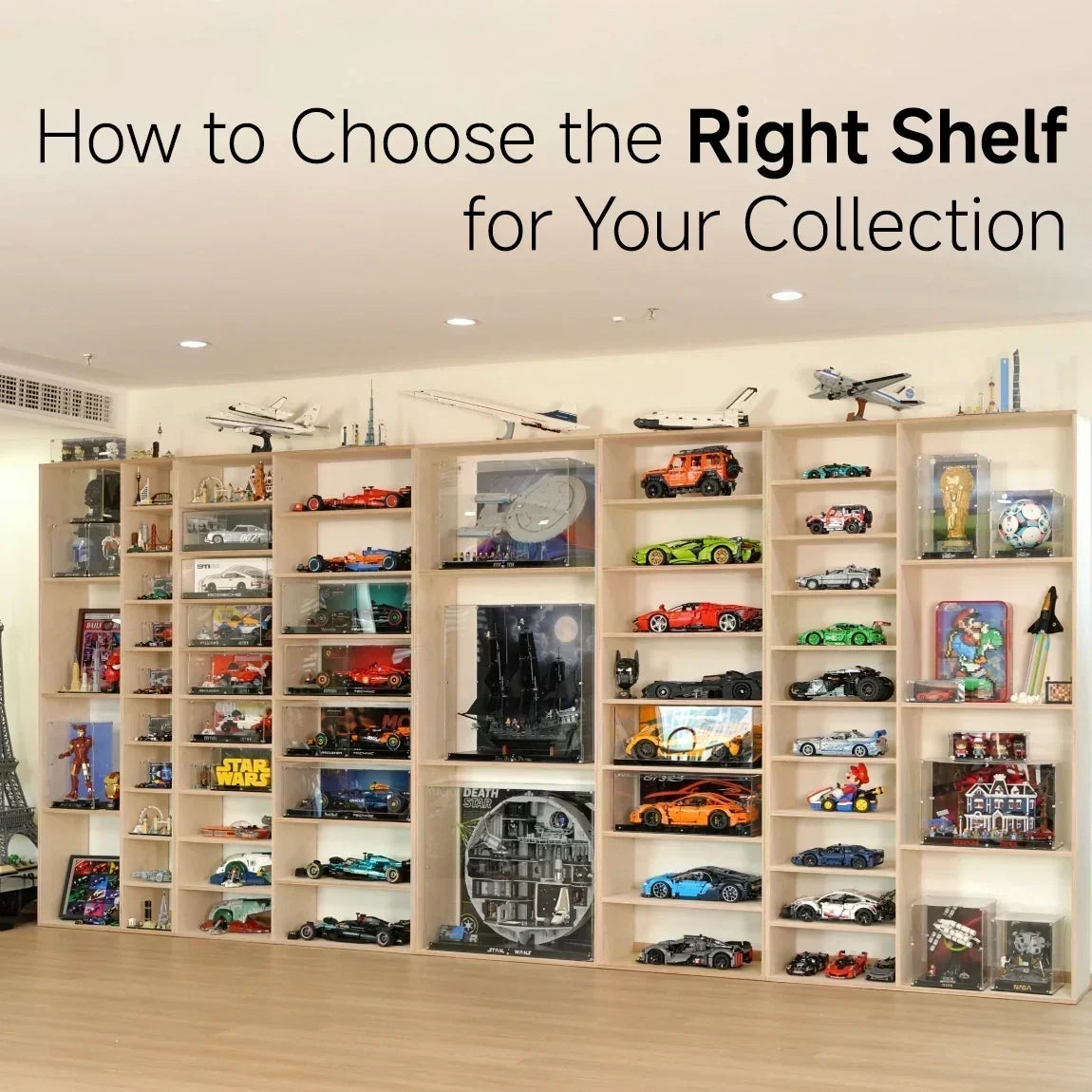
Desktop vs Wall-Mounted LEGO Display Cases
Where the case sits can affect both the LEGO model and the rest of the room.
Desktop and Shelf Display Cases


Traditional cases work well on:
- desks
- shelves
- sideboards
- cabinets
- collector-room furniture
They are particularly useful for models you want to see from several angles.
They also offer flexibility because the whole display can usually be moved later.
The limitation is obvious:
they still require horizontal surface space.
As collections grow, shelf space can disappear quickly.
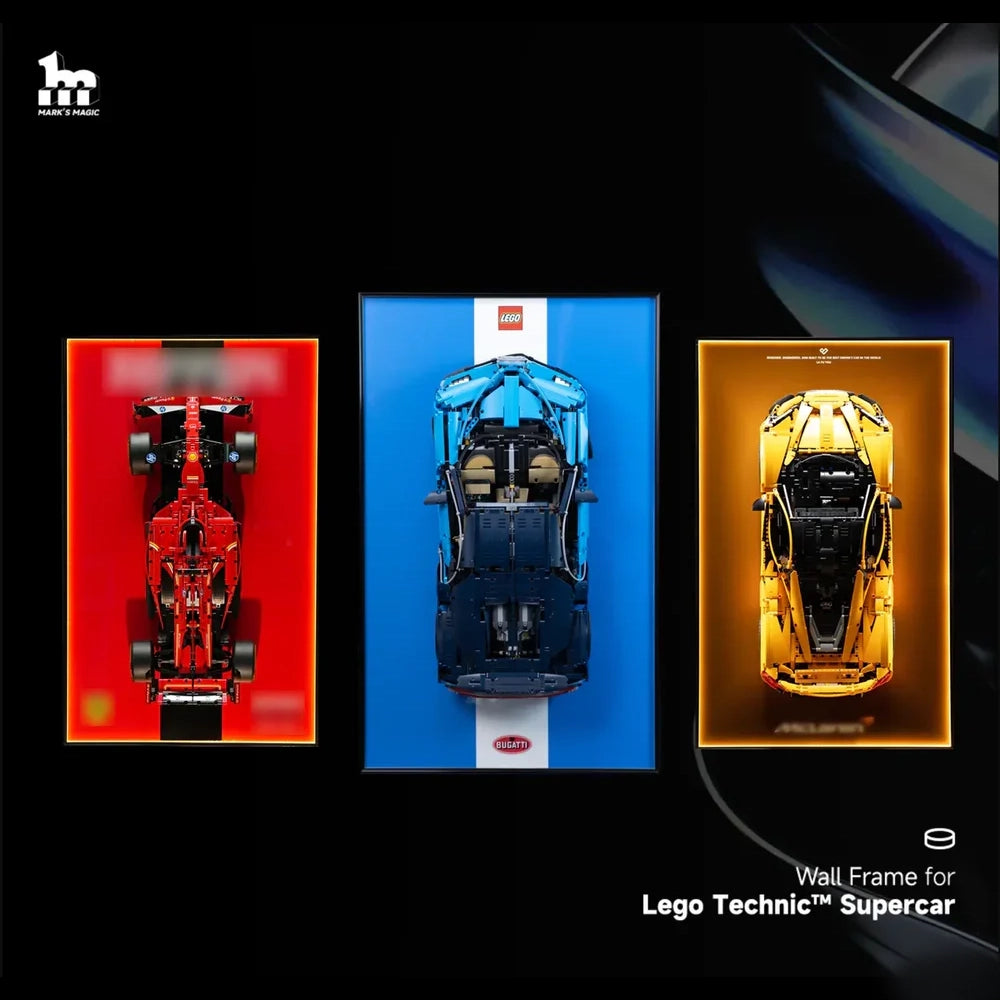
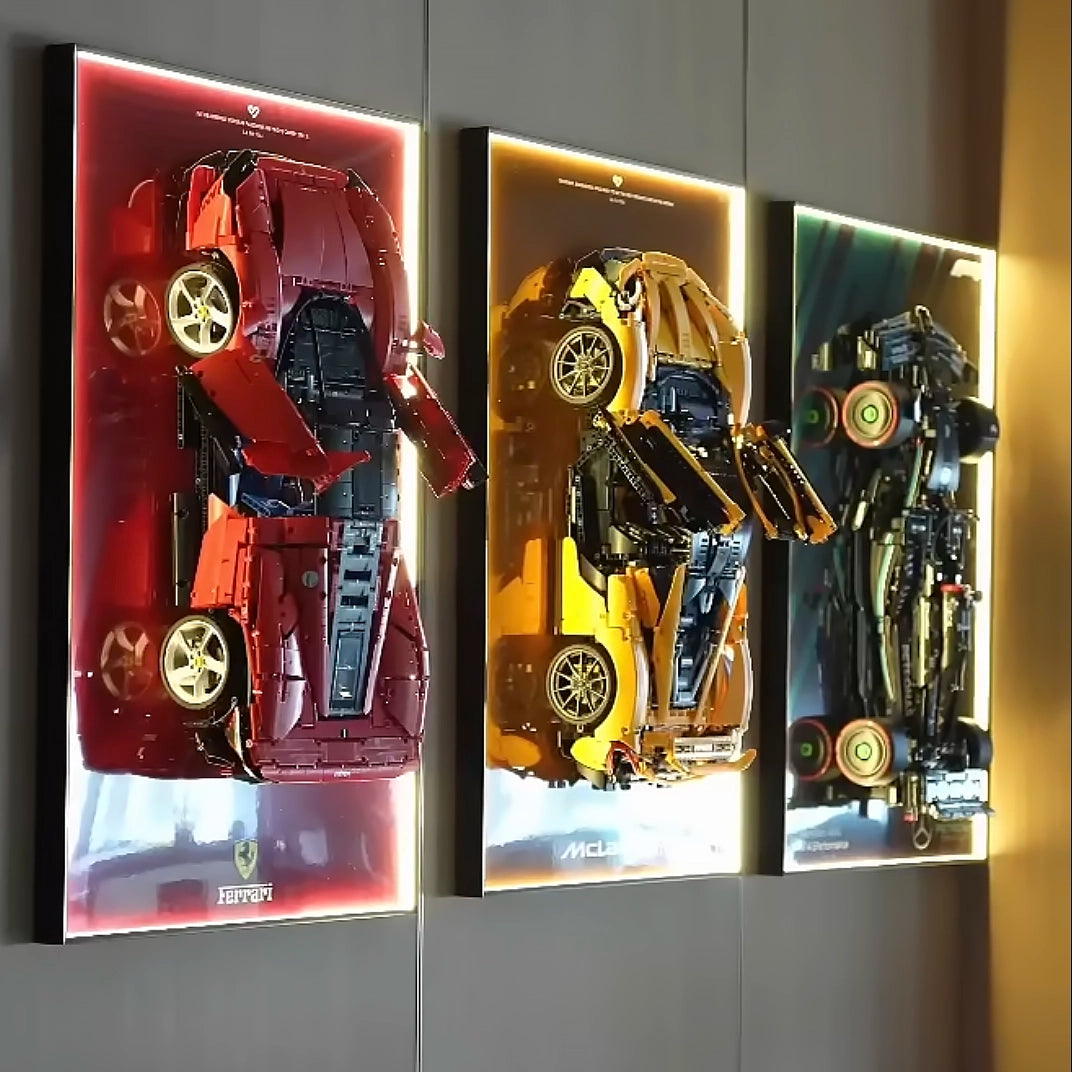
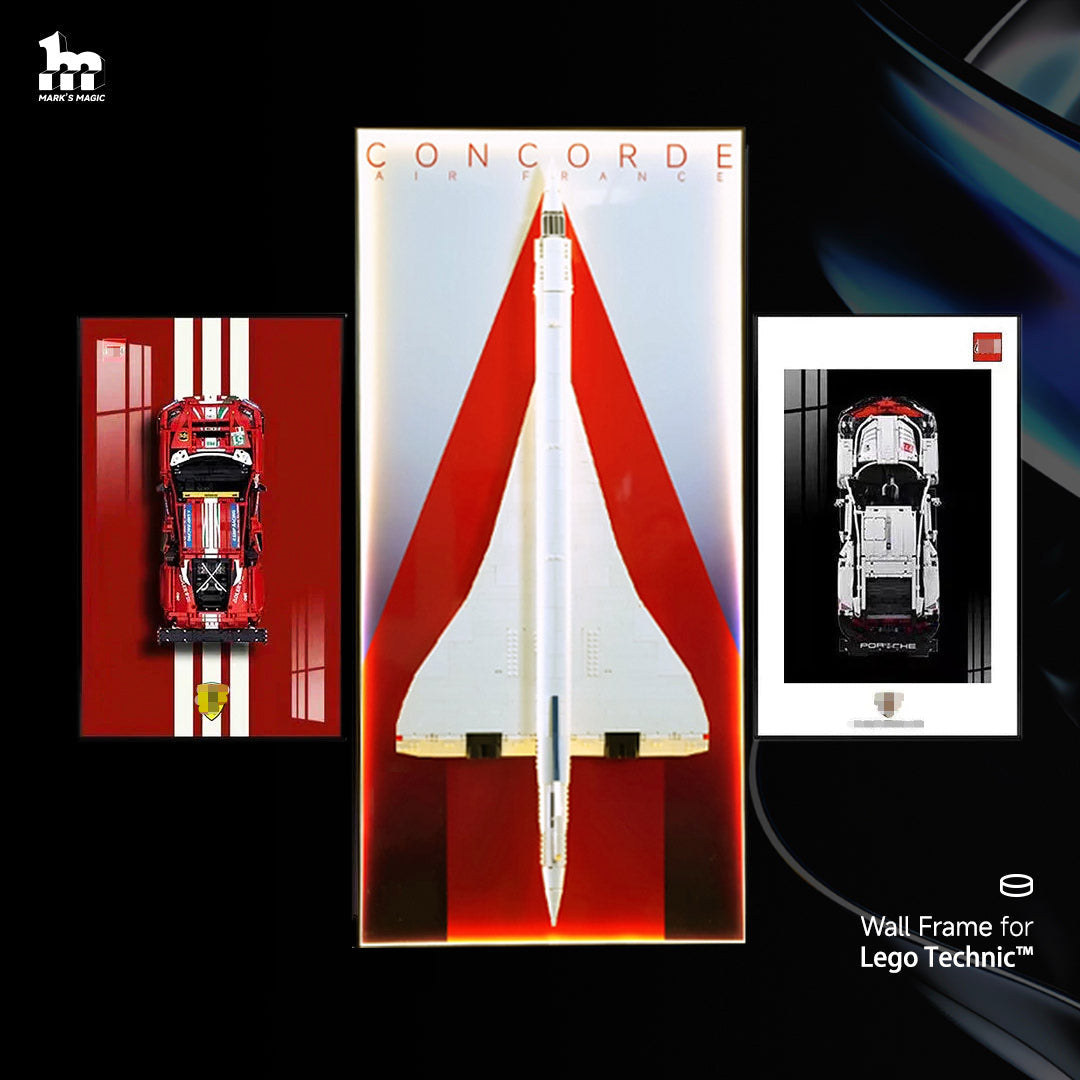
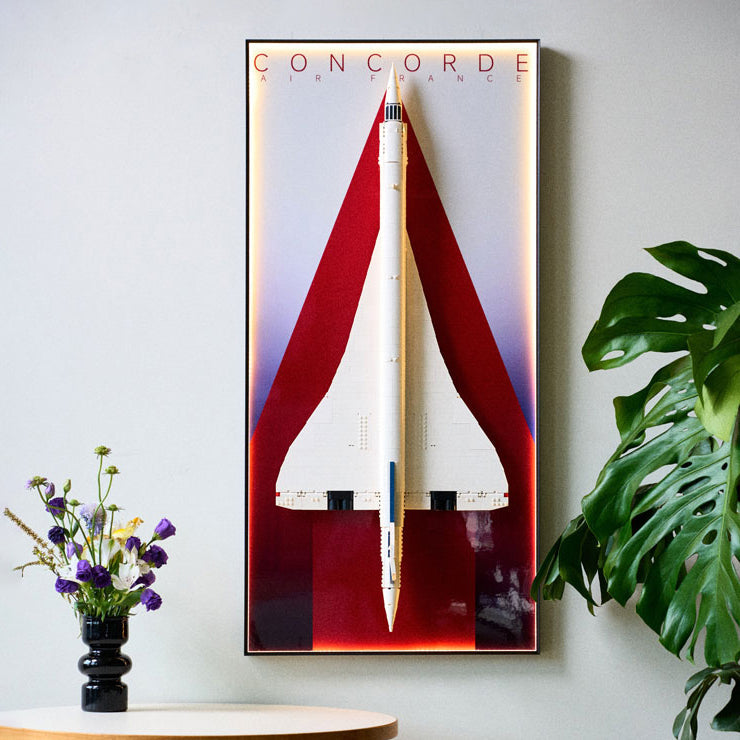
Wall-Mounted Display Cases

Wall-mounted cases use vertical space instead.
They can work especially well for:
- minifigures
- helmets
- cars
- smaller scenes
- themed collections
- compact collector rooms
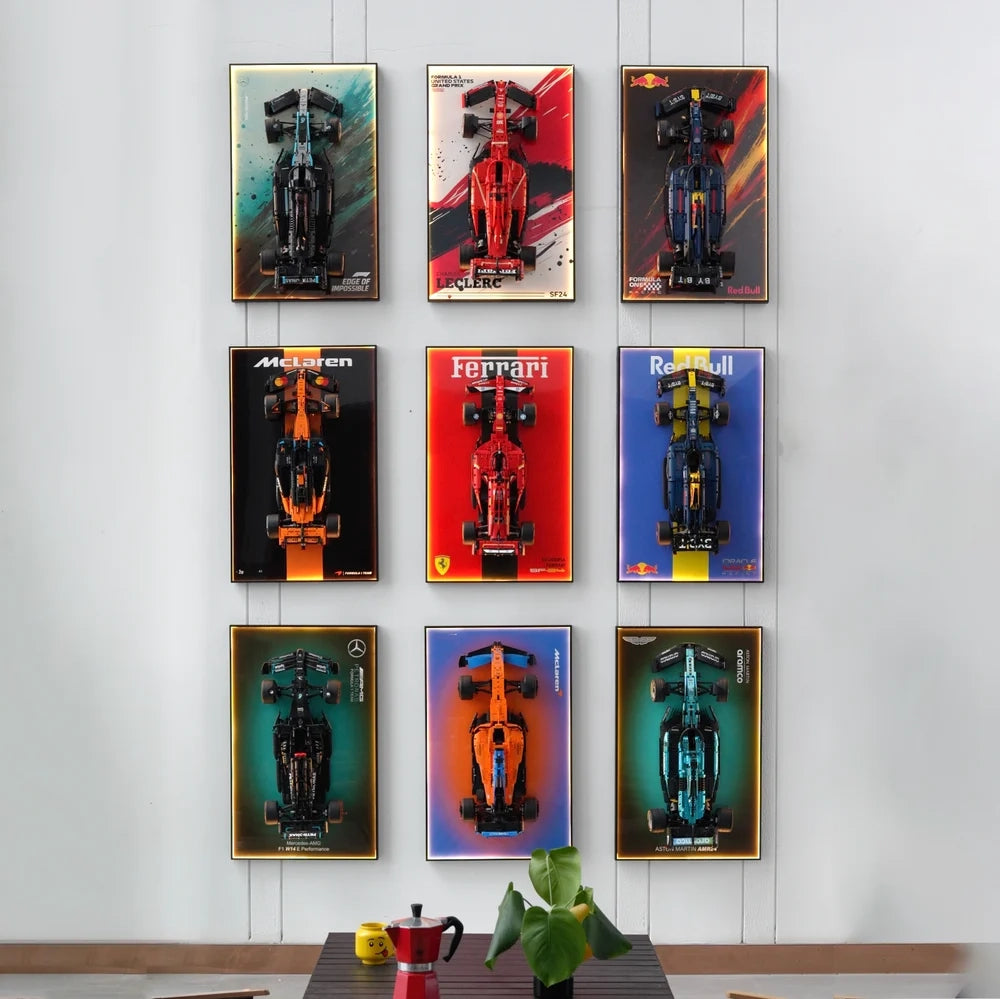
Moving LEGO onto the wall also changes how the collection interacts with the room.

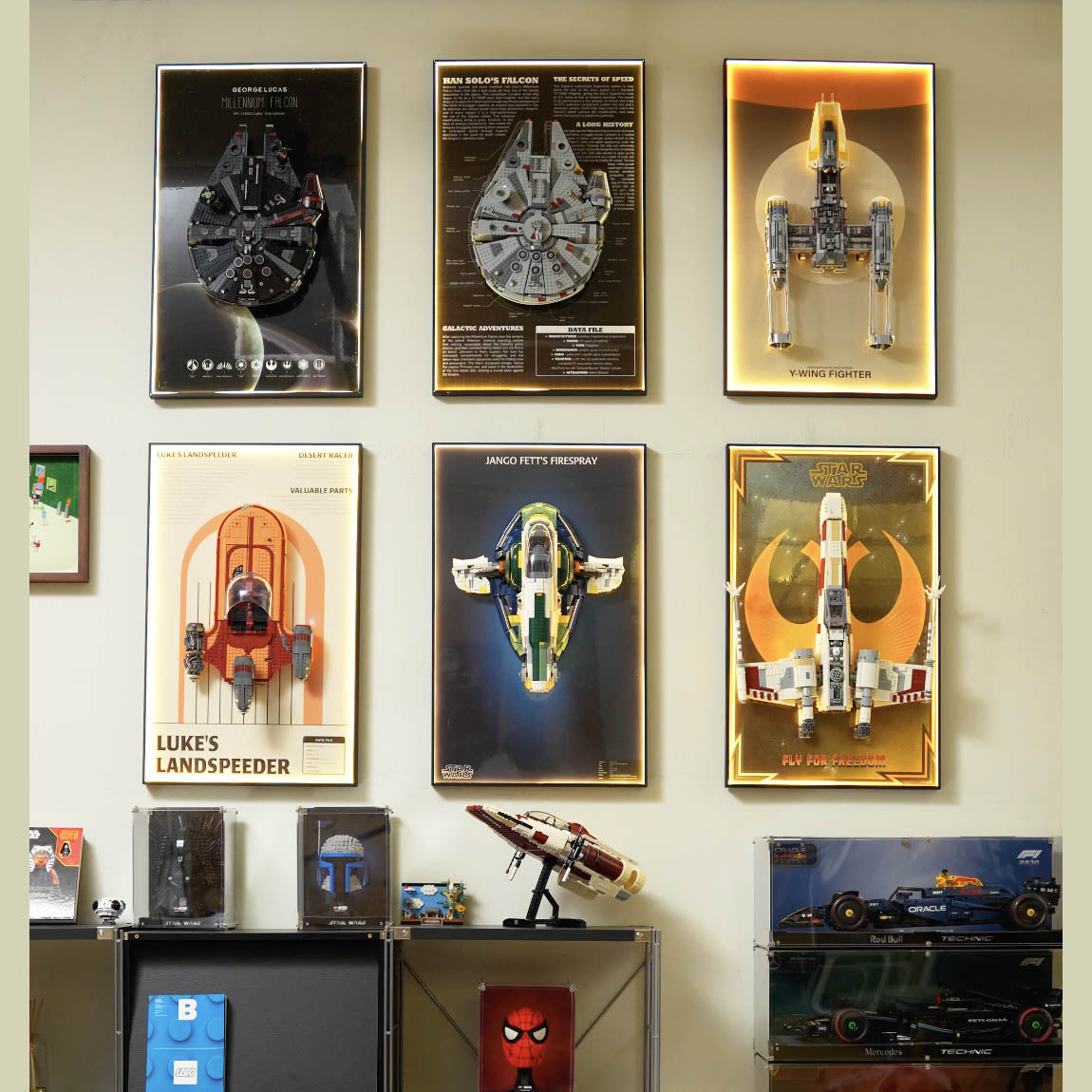
Instead of sitting on furniture, the model begins to work more like framed decor.
Before choosing a wall-mounted case, consider:
- total weight
- wall type
- mounting hardware
- display depth
- installation location
- how easily you can access the model
Wall mounting is useful, but it should always be matched to the weight and shape of the display.
Lighting a LEGO Display Case

Lighting can completely change how a LEGO display feels.
But brighter does not necessarily mean better.
The goal should usually be to reveal detail and atmosphere rather than flood the case with light.
Common options include:
- top LED panels
- LED strips
- indirect lighting
- integrated spot lighting
- backlighting
Avoid Harsh Glare
Clear acrylic naturally reflects some light.
Mirrored surfaces can amplify reflections further.
For a cleaner result, consider:
- diffused LEDs
- concealed light sources
- softer overhead illumination
- avoiding visible LED dots
Lighting should support the LEGO model rather than become the main object you notice.
Plan Cable Management Early
Lighting is easy to add.

Hiding the wires afterwards can be much harder.
Before installing a case, think about:
- USB routing
- wall outlets
- power banks
- extension cables
- cable channels
- multi-case connections
A row of beautifully lit cases can quickly lose its visual impact if power cables are running visibly between every display.
LEGO Display Case Ideas by Theme
Different LEGO themes create different display challenges.
A wide Star Wars starship, a tall Harry Potter castle, a black Batmobile, and a collection of Marvel minifigures do not necessarily benefit from the same kind of enclosure.
Below are several examples of how different LEGO themes can be displayed.
If a particular setup interests you, click the product image to view the corresponding display case, including dimensions, materials, compatibility and other product details.
LEGO Star Wars Display Case Ideas
Star Wars collections often contain some of the most unusually shaped LEGO display models.
Collectors may own:
- starfighters
- UCS ships
- helmets
- droids
- dioramas
- minifigures
For ships such as the Millennium Falcon or X-Wing, the silhouette is particularly important.

Enough space around the wings, antennas and body of the ship can make the display feel much more cinematic than a case that tightly follows every edge.

Helmets and droids, on the other hand, often work well in more compact vertical cases.
Star Wars also lends itself naturally to:
- darker backgrounds
- space-inspired artwork
- controlled accent lighting
- coordinated multi-display setups
Looking for more inspiration?
Explore our LEGO Star Wars wall display ideas or see how ships, helmets and droids can be incorporated into a larger LEGO Star Wars collector display.
LEGO Harry Potter Display Case Ideas
Harry Potter LEGO collections often combine:

- large architecture
- castles
- minifigures
- vehicles
- interior scenes
- highly detailed locations
Castle-style sets need generous vertical clearance around towers, rooflines and architectural details.

Smaller story scenes can benefit from tighter enclosures that create more of a miniature-world effect.
For complex architecture, dust protection can become especially useful because cleaning large numbers of small exposed details takes time.
For collectors displaying several Wizarding World sets together, consistent case heights, backgrounds and lighting can also help separate models feel like part of one larger collection.
LEGO Batman Display Case Ideas

Batman displays often rely heavily on:
- Batmobiles
- dark LEGO elements
- strong silhouettes
- cowls and helmets
- Gotham-inspired environments
Black and dark-gray pieces also tend to make visible dust particularly noticeable.

An enclosed case can therefore provide both visual and practical benefits for Batmobiles or Batman collectibles that remain on display long-term.

For larger Batman collections, matching background styles or display dimensions can also help several vehicles and character pieces feel like one coherent Gotham-inspired setup.
LEGO Marvel Display Case Ideas
Marvel collections can vary enormously in scale.

They may include:
- helmets
- busts
- vehicles
- character builds
- dioramas
- large minifigure collections
A helmet mainly requires vertical clearance.
A vehicle needs horizontal room.
A minifigure collection needs organization and visibility.
This makes Marvel a good example of why the theme alone should not determine the type of case.
LEGO Disney Display Case Ideas

Disney LEGO models are often:
- colorful
- architectural
- character-driven
- highly decorative
- strongly connected to nostalgia
Large castle sets need enough room around towers, flags, balconies and decorative rooflines.
Because Disney builds often already contain a lot of color, the background does not always need to be visually complex.
LEGO F1 Display Case Ideas
F1 demonstrates particularly well why different LEGO models need different types of display.

A LEGO F1 collection can include:
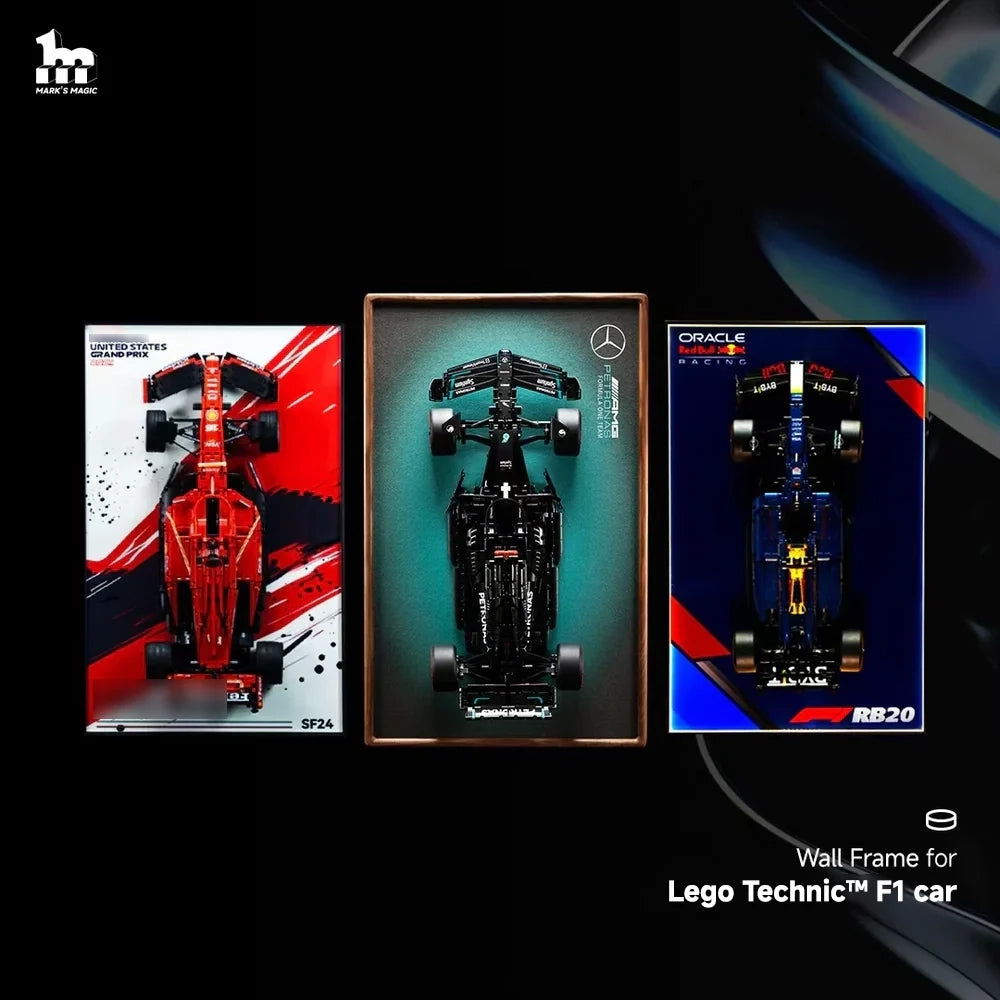
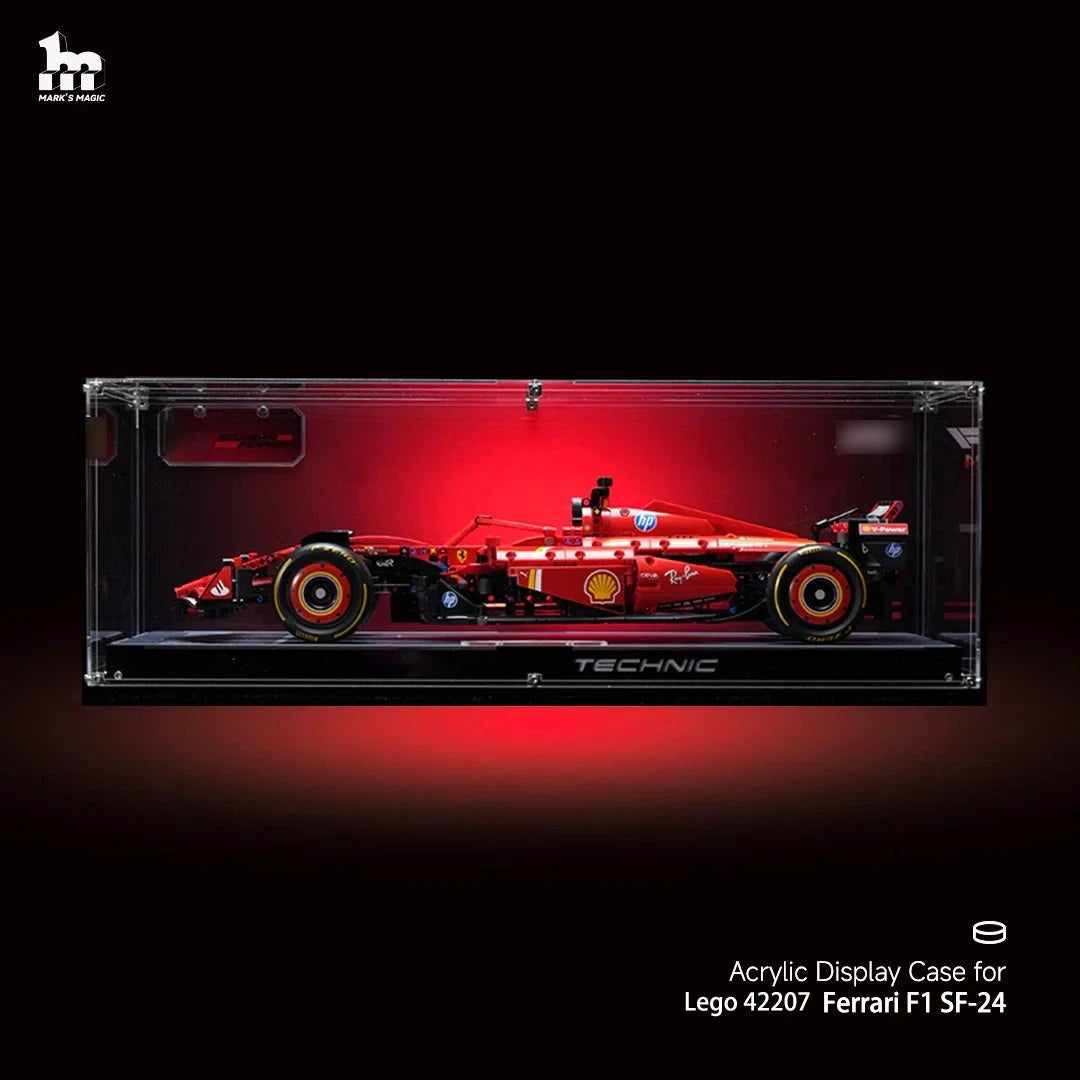
Technic F1 Cars
These models tend to be long and relatively deep.
Important clearance areas include:
- front wing
- rear wing
- wheels
- aerodynamic surfaces
Enough space around these features helps preserve the full racing silhouette.

Speed Champions F1 Cars
These models are much smaller individually.


F1 Helmets Display Case
Helmets need more vertical than horizontal space.

Repeated case dimensions and lighting can turn several individual helmet builds into a coherent racing wall or shelf display.

The best F1 display therefore depends less on the word “F1” and more on whether you are displaying a Technic car, Speed Champions lineup or helmet collection.
More Dust-Free Display Solutions Here
LEGO Minifigure Display Case Ideas
Minifigures have very different display requirements from large LEGO sets.

Depth becomes less important.

The priorities are:
- visibility
- capacity
- organization
- row spacing
- collection expansion
For a single Collectible Minifigure series, a compact case may be enough.
For 50, 100 or more figures, traditional shelving can consume a surprising amount of horizontal space.
For more ideas, see our guide to displaying LEGO minifigures from small collections to 100+ figures.Check Here to Explore Ultimate Minifigures Display Solution
Quick Comparison: Which LEGO Display Case Fits Your Needs?
| Your Priority | Display Option to Consider |
|---|---|
| One premium collector set | Model-specific acrylic case |
| Reduce routine dusting | Fully enclosed display case |
| Bright room | UV-resistant acrylic + sensible placement |
| Minimal appearance | Frameless acrylic case |
| Interior decor aesthetic | Wood-framed display case |
| Limited shelf space | Wall-mounted display case |
| 50–100+ minifigures | Multi-row wall display case |
| Cinematic presentation | Themed background + controlled lighting |
| See more of the model | Mirrored base |
| Frequent access | Easy-opening design |
| Matching collection | Consistent dimensions, lighting and artwork |
| Keep existing shelving | Individual cases for selected models |
When Is a LEGO Display Case Worth It?
Not every LEGO set needs a case.
That is worth saying clearly.
A small set that is regularly rebuilt, handled or played with may be perfectly fine on an open shelf.
The useful question is not:
“Does every LEGO set need a display case?”
It does not.
A better question is:
“Does the protection and presentation this case provides justify the additional cost and space for this particular LEGO set?”
Sometimes the answer is yes.
Sometimes a shelf, stand, wall frame or direct wall mount is the better solution.
A good buying guide should help you recognize the difference.
Final Thoughts
The right LEGO display case should do more than simply fit around a model.
It should suit:
- the proportions of the LEGO set
- the amount of visual breathing room you prefer
- the room where the model will be displayed
- the level of dust and UV protection you actually need
- how often you interact with the build
- the visual atmosphere you want to create
- how your collection may grow in the future
Some collectors prefer a completely clear acrylic enclosure.
Others want cinematic artwork, lighting, mirrored bases or a wood frame that makes the display feel closer to wall art.
Neither approach is inherently better.
The best display is the one that makes sense for the model, the collector and the space around it.
Most importantly, a good display should make you want to stop and look at the set again—even long after the building process is finished.
Why We Care About LEGO Display

Like many LEGO enthusiasts, we know what it feels like to spend hours—or sometimes days—working through a build.
The final brick clicks into place.
You step back.
For a moment, you simply look at what you have created.
We never felt that the experience should end there.
ElevenMark grew from a group of LEGO enthusiasts and designers who came together around the same idea: the models we spend so much time building deserve more than disappearing onto a crowded shelf.
We started thinking about display as part of the collecting experience itself.
How should the proportions of the model interact with the case?
How can a background bring out the story without overwhelming the LEGO set?
How can lighting reveal details naturally?
How can a display protect a collection while still feeling like part of the home?
And how can a finished LEGO model become something you continue to enjoy every time you walk past it?
Those questions continue to shape the display cases, wall frames and mounting solutions we design today.
Our goal is simple:
to give every LEGO set you build a display worthy of the time, creativity and memories behind it—and to help turn the models you love into part of the art of your home.

Von MaZhiyuan






Hinterlasse einen Kommentar
Diese Website ist durch hCaptcha geschützt und es gelten die allgemeinen Geschäftsbedingungen und Datenschutzbestimmungen von hCaptcha.